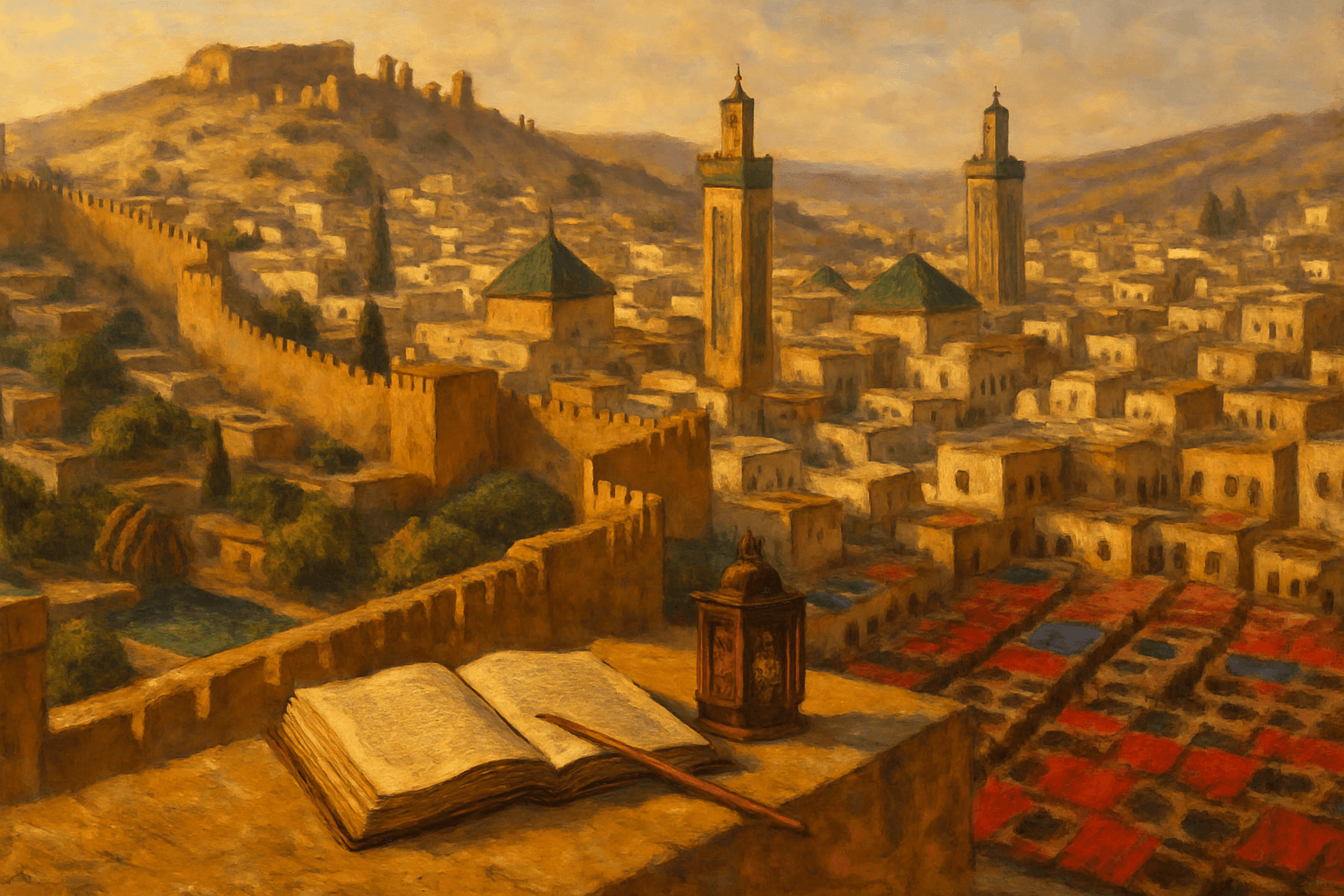
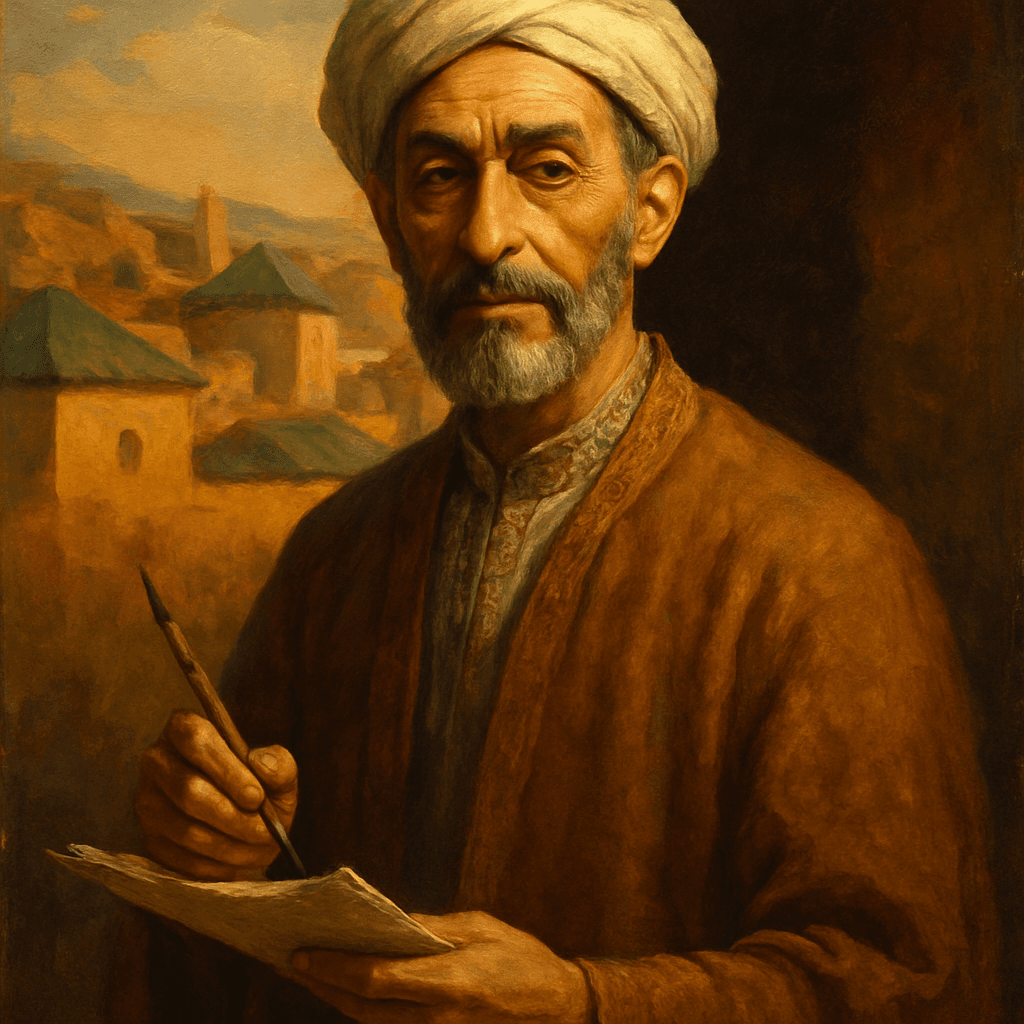

City walk · Fes el-Bali, Fez · Morocco
1313–1374 · a real person
An exiled Andalusi minister and physician, elegant and dry, quick to mock power, tender about gardens, ink and water
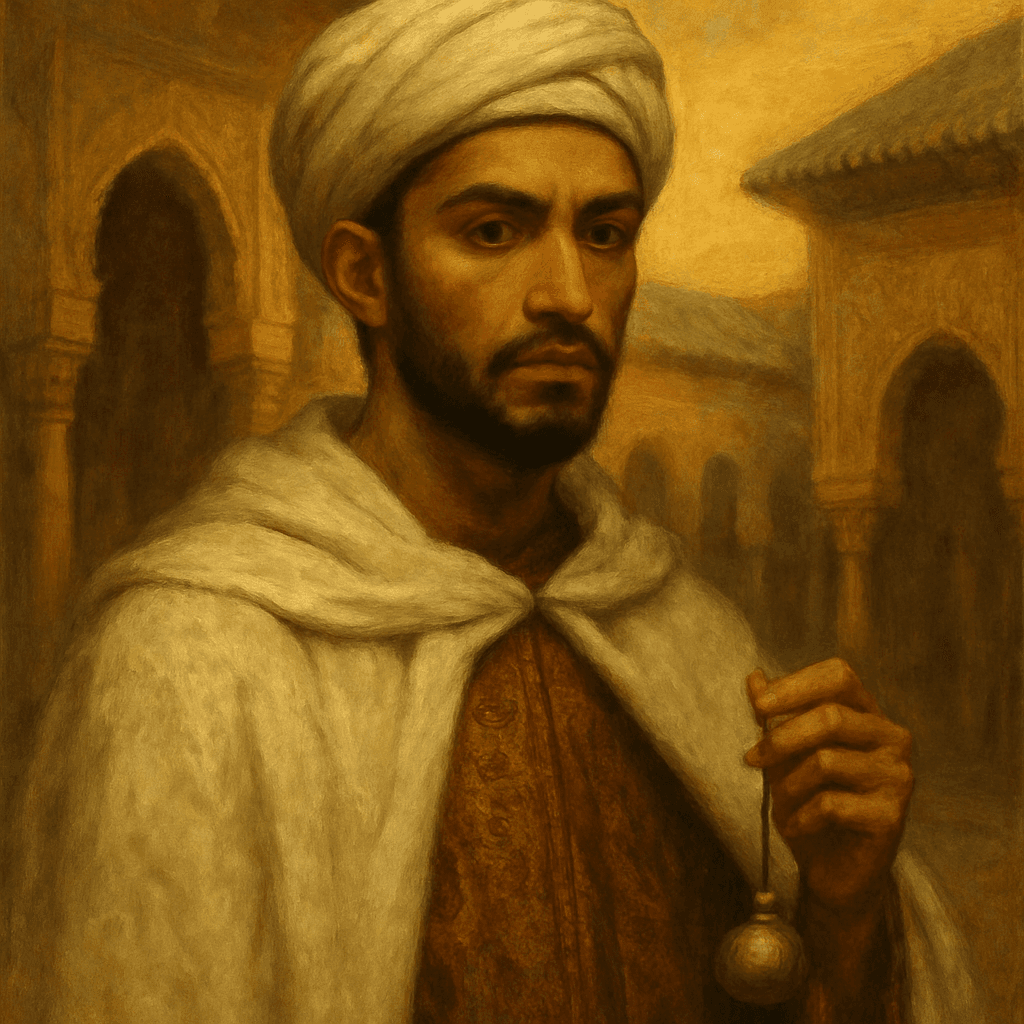
I am Lisan ad-Din Ibn al-Khatib, once the tongue of Granada, latterly a guest of Fez — a guest, let us say, who was not permitted to leave. I wrote the history of my own city, my own life inside it, which is the vanity of a man who suspected he would need a witness. Fez took me in, fed me, taught me, and then closed a door on me in 1374. Today I want to show you this place as a stranger sees it: water first, then stone, then the smell of the trades, and at the end a bench in a city I never lived to see. Give me a full day — this is no hour's errand — and start with me at the palace gates.
You’re walking this one before anyone at Walk & Tell has. If something looks wrong, tap Report at any stop — we’ll fix it for everyone after you.
A long day on foot across Fez: the golden palace gates, the Jewish quarter beside them, gardens, madrasas, the tanning pits, the oldest university on earth, and finally a taxi out to the Ville Nouvelle to sit under trees and look back at all of it. Your guide is Lisan ad-Din Ibn al-Khatib, poet, physician and vizier of Granada, who came to Morocco as a refugee and died a prisoner in Fez in 1374. He talks less about sultans than about water, ink, leather and the smell of a street. No puzzles — just walking, looking, and one man's account of the city that sheltered and then swallowed him.
Start here
Avenue Derb Moulay Abdellah, Moulay Abdellah
Stand on Place des Alaouites, outside the great golden-bronze doors of the Royal Palace, at the western edge of Fes el-Jdid. Face the gates.
DirectionsFes el-Bali · 10 stops · 7 km
about 80 min walking, 40 min listening at the stops — going inside is extra · Tap a stop on the map for a preview.
1 / 6
Best time to walk: Start by 9am: medina lanes are cool and shaded early, the Marinid hill has no shade at midday, and the tanneries smell strongest in the afternoon heat. Jnan Sbil closes on Mondays; Dar Batha closes on Tuesdays.
Best from stop 1 — the story is told in order. Tap Start here on any stop to begin there instead; the guide will catch you up.
Royal Palace of Fez
“The Gold Doors”
The Dar al-Makhzen, royal citadel since 1276, with its ornate 20th-century bronze gates on Place des Alaouites.
Quartier Mellah
“Behind the Palace Wall”
The Mellah, the Jewish quarter formed beside the Marinid royal district, with its 17th-century synagogue built by Mimoun Ben Sidan.
Jnan Sbil Gardens
“Water Before Stone”
A 7.5-hectare public garden between the two old cities, fed by the Oued Fes and planted with thousands of species.
Dar Batha Museum of Islamic Arts
“Two Stones for the Dead”
A former palace, now the museum of Moroccan arts, holding pottery, woodwork and two Marinid tombstones.
Bab Boujloud
“The Blue Gate”
The triple-arched ornamental gate into Fes el-Bali, blue outside, green inside, built in 1913.
Ibn al-Khatib
“The Prisoner's Corner”
The site associated with Ibn al-Khatib, the Granadan poet, historian and vizier who died in Fez in 1374.
Marinid Tombs
“The Roofs That Fell In”
Ruined 14th-century royal mausoleums on the hill north of the medina, and the city's best-known lookout.
Marked temporarily closed on Google Maps — the story still works from outside.
Tanneries view
“The Pits of Chouara”
The terrace view over Fez's oldest working tannery, its round stone vats of dye and lime still in daily use.
Al-Attarine Madrasa
“School of the Perfumers”
A jewel-box Marinid madrasa of 1323–25, named for the spice and perfume market at its door.
Mosque and University of al-Qarawiyyin
“The Oldest Voice”
Founded in 857–859, the mosque and university of al-Qarawiyyin, teaching without interruption ever since.
The walk passes these without stopping. Add one and the route bends to take it in — the guide has nothing to say about them, so you are on your own there.
The Granadan poet-vizier fled to Marinid Morocco, ended his life a prisoner in Fez, and knew its palace quarter, its madrasas and the Qarawiyyin as an exile and a scholar.
1313–1374
Lisan ad-Din Ibn al-Khatib (16 November 1313 – 1374) was an Andalusi polymath from the Emirate of Granada: poet, historian, philosopher, physician and chief minister. His verses were carved into the walls of the Alhambra, and he composed muwashshahat still sung today, among them 'Jadaka al-Ghaithu'. In 1369 he completed his great history of Granada, al-Ihata, which contains his own autobiography. He was a contemporary and acquaintance of Ibn Khaldun. Having taken refuge in Marinid Morocco, he was imprisoned in Fez, where he died in 1374.
No reviews yet — be the first to walk it.