
City walk · Fes el-Bali, Fez · Morocco
d. c. 880 · a real person
a 9th-century merchant's daughter, plain-spoken and dry, proud of what she paid for and uneasy about being a legend
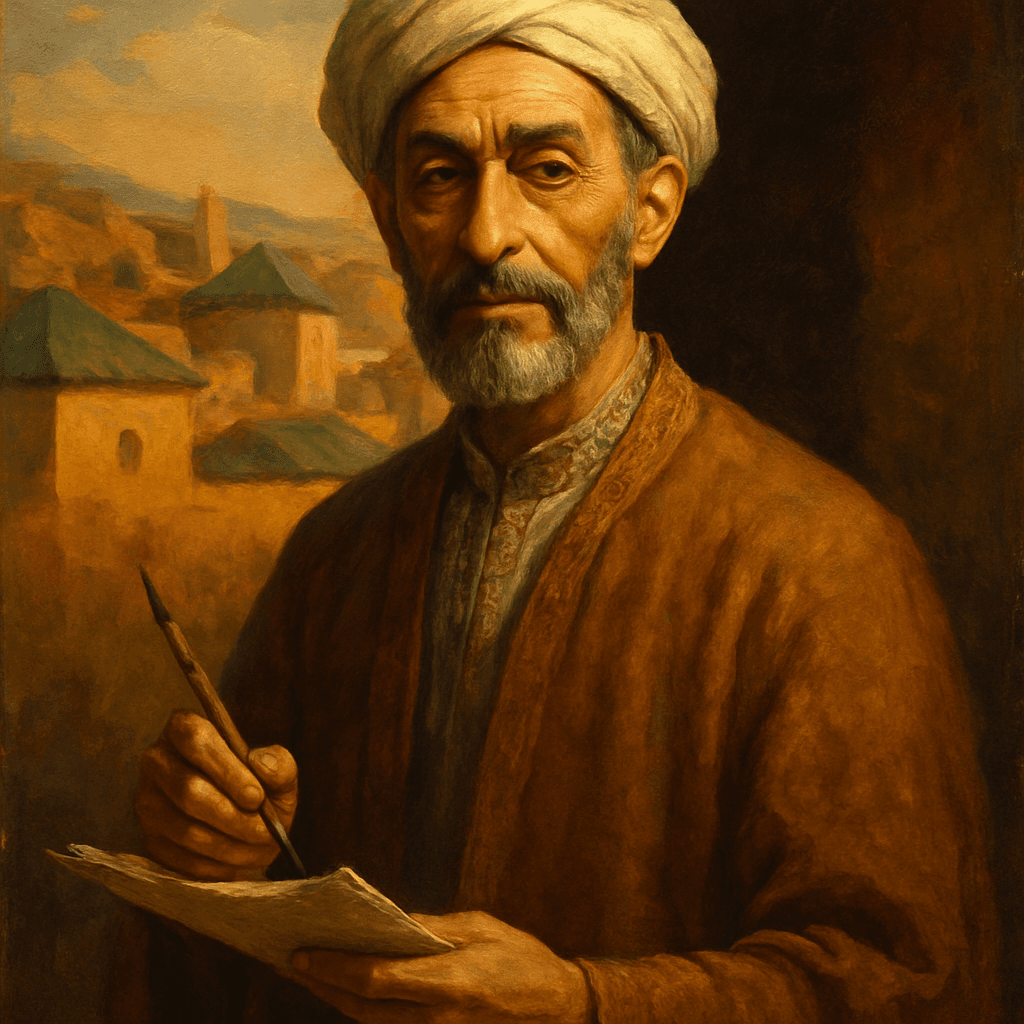
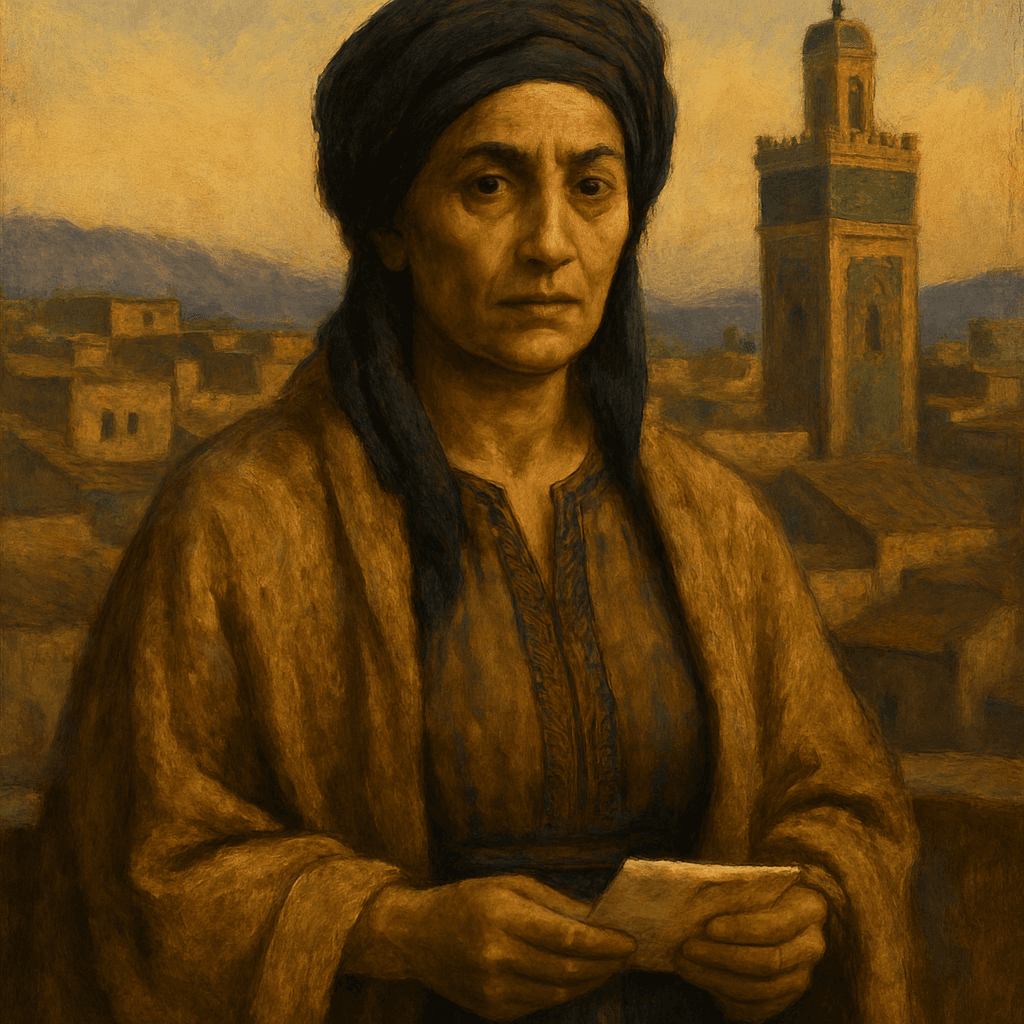
I am Fatima, daughter of Mohammed al-Fihri, of Kairouan and then of this town. My father died rich and I did the only sensible thing with the money: I turned it into a room where people could learn. That was more than a thousand years ago, and the room is still full — but somewhere between then and now the city began to argue about whether I existed at all. Walk the whole of Fez with me today, gate to hill, and judge for yourself what a woman leaves behind.
You’re walking this one before anyone at Walk & Tell has. If something looks wrong, tap Report at any stop — we’ll fix it for everyone after you.
A full day across Fez told by Fatima al-Fihri, the woman remembered for spending her inheritance on the mosque that became al-Qarawiyyin. She walks you from Bab Boujloud through the gardens, the madrasas, the carpenters' inn, the shrine, the tanneries and up to the Marinid hill, watching what eleven centuries did with her gift. No puzzles: just the city, and a woman who is not sure history remembers her correctly. Half a day on foot, with a break in the middle.
Start here
Bab Boujloud باب بوجلود, Fès-Médina ⴼⴰⵙ-ⵎⴷⵉⵏⴰ فاس-المدينة
Stand outside the blue triple-arched gate of Bab Boujloud, on the open square side, facing the arches.
DirectionsFes el-Bali · 10 stops · 6.4 km
about 46 min walking, 40 min listening at the stops — going inside is extra · Tap a stop on the map for a preview.
1 / 6
Best time to walk: Start by 9am: the tanneries are best before the sun heats them, Jnan Sbil is closed on Mondays and Dar Batha shuts Tuesdays, and the Marinid Tombs are made for the late-afternoon call to prayer.
Best from stop 1 — the story is told in order. Tap Start here on any stop to begin there instead; the guide will catch you up.
Bab Boujloud
“The Blue Gate”
The triple-arched gate that everyone treats as the front door of old Fez.
Jnan Sbil Gardens
“Jnan Sbil, the Sultan's Water”
Nineteenth-century royal gardens between the two halves of the medina, opened to everyone in 1917.
Dar Batha Museum of Islamic Arts
“Dar Batha's Keeping-Room”
A former palace, now the museum where Fez keeps its pottery, woodwork and salvaged fragments.
Bou Inania Madrasa
“Bou Inania, the Sultan's School”
The 1350–55 Marinid madrasa, the only one in Morocco that also served as a congregational mosque.
Dar al-Magana
“The House of the Clock”
Dar al-Magana, the 14th-century water-clock façade standing opposite the Bou Inania Madrasa on Tala'a Kebira.
Funduq al-Najjariyyin
“The Carpenters' Inn”
A 1711 caravanserai on the carpenters' square, now the museum of Moroccan woodwork, with its tiled public fountain alongside.
Moulay Idriss II shrine
“The Founder's Tomb”
The shrine of Moulay Idriss II, founder of Fez, at the heart of the medina's holiest quarter.
Al-Attarine Madrasa
“Al-Attarine, School of the Perfumers”
A jewel-box Marinid madrasa of 1323–25 beside the spice market, built to house students of al-Qarawiyyin.
University of al-Qarawiyyin
“Al-Qarawiyyin”
The mosque founded in 857–859 that grew into the world's oldest continually operating place of higher learning.
Saffarin Madrasa
“Place Seffarine”
The coppersmiths' square and the Saffarin Madrasa of 1271, the first madrasa the Marinids ever built.
The walk passes these without stopping. Add one and the route bends to take it in — the guide has nothing to say about them, so you are on your own there.
She is remembered as the founder, in 857–859, of the al-Qarawiyyin mosque that grew into the university at the heart of this walk, and her family were Kairouan migrants who settled in Fes el-Bali.
d. c. 880
Fatima al-Fihri is recorded by the chronicle Rawd al-Qirtas as the daughter of a wealthy merchant, Mohammed al-Fihri, whose family migrated from Kairouan in Tunisia to Fez in the early 9th century. She and her sister Mariam inherited a large fortune; Fatima is said to have vowed to spend hers entirely on a mosque for her community, founded in 857–859, and Mariam on the Mosque of the Andalusians the same year. That mosque became one of the great teaching centres of the Islamic world and is cited by UNESCO as the oldest continually operating institution of higher learning. Modern historians question the story: a foundation inscription found under plaster names Dawud ibn Idris and the year 877, and some scholars argue Fatima may be a legend rather than a documented person.
No reviews yet — be the first to walk it.