
City walk · Fes el-Bali, Fez · Morocco
1329–1358 · a real person
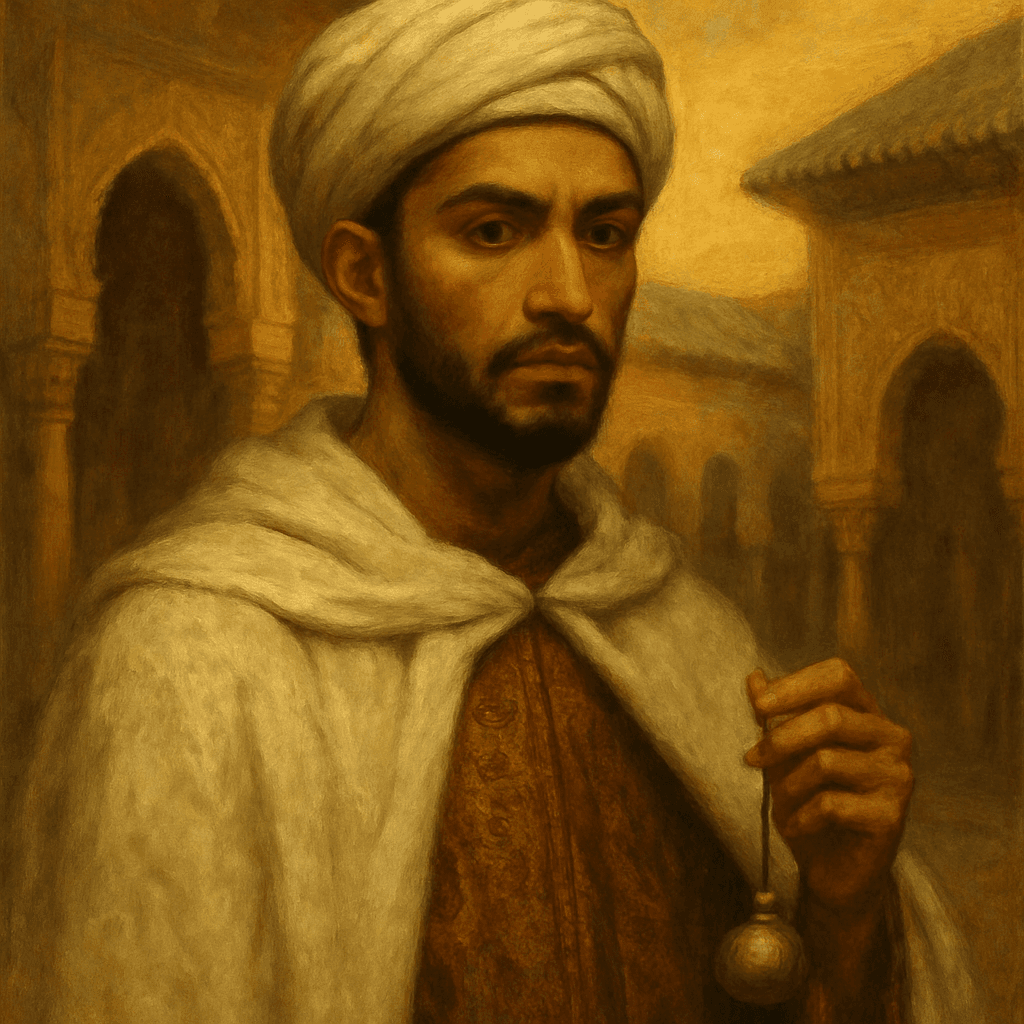
a young Marinid sultan, imperious and quick-witted at first, increasingly candid, finally tender — a man arguing with his own legacy
I am Abu Inan Faris, and everything you are about to walk through, I either built, paid for, or lost. They say I spent too much on a school. They say I took a throne that was my father's. Both are true, and I would do both again — but I need someone to walk the distance between my palace and my madrasa, because I never finished the journey myself. Come. The hour is running.
Fes el-Bali · 9 stops · 2.6 km
about 48 min walking, 36 min listening at the stops — going inside is extra · Tap a stop on the map for a preview.
1 / 6
You’re walking this one before anyone at Walk & Tell has. If something looks wrong, tap Report at any stop — we’ll fix it for everyone after you.
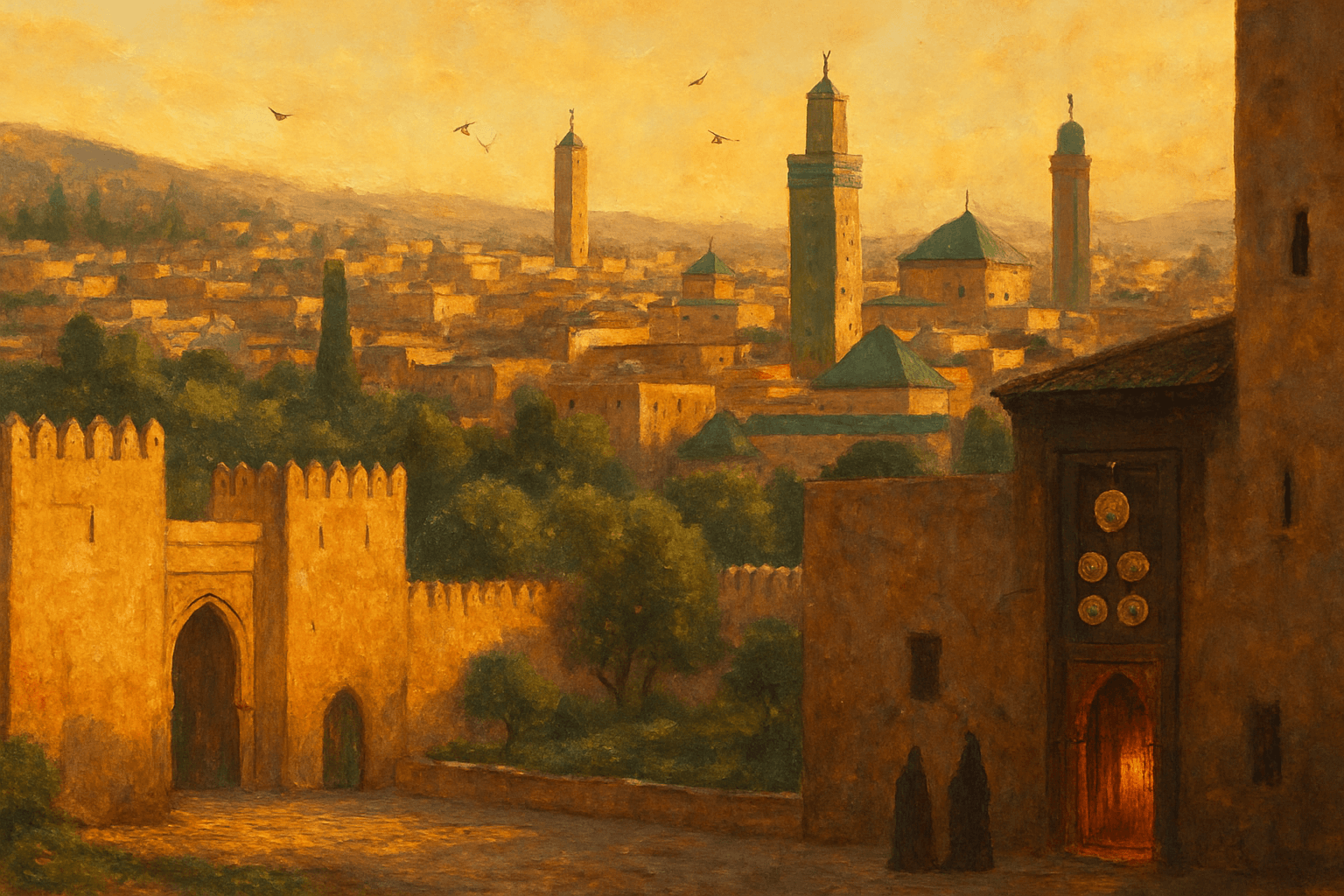
Fez in the 1350s was two cities: the royal citadel of Fes el-Jdid, all gates and mechouars, and the older medina climbing above it, thick with scholars, carpenters and tanners. This walk crosses from one to the other in the company of Abu Inan Faris, the sultan who spent a fortune on a madrasa, hung a water clock on a wall to keep its hours, and did not live long enough to hear it run down. There are no puzzles here — only nine places, told in order, each one a chapter. Bring your eyes: the story keeps pointing at things most people walk straight past.
Start here
Avenue Derb Moulay Abdellah, Moulay Abdellah
Stand on Place des Alaouites, facing the great brass gates of the Royal Palace, with the Mellah walls behind you.
DirectionsBest from stop 1 — the story is told in order. Tap Start here on any stop to begin there instead; the guide will catch you up.
Royal Palace of Fez
“The Gates of Dar al-Makhzen”
The vast royal palace of Fez, whose brass and zellij gates at Place des Alaouites are its most public face.
Bab Dekkakin
“Bab Dekkakin, Gate of the Benches”
A fortified ceremonial gate standing between the Old and New Mechouars on the northern edge of Fes el-Jdid.
Jnan Sbil Gardens
“The Garden Between Two Cities”
A public garden laid between Fes el-Jdid and Fes el-Bali, watered by the river that made both cities possible.
Dar Batha
“Dar Batha, the Late Palace”
A 19th-century royal palace begun by Sultan Hassan I, now a museum of Moroccan arts with over 6,500 objects.
Bab Bou Jeloud
“The Blue Gate”
The ornate main gate into Fes el-Bali, built by the French administration in 1913 as a grand entrance to the old city.
Dar al-Magana
“Dar al-Magana, House of the Clock”
The 14th-century house whose street façade carries an elaborate weight-driven water clock, built to keep the madrasa's hours.
Bou Inania Madrasa
“Médersa Bou Inania”
Built 1350–55 by Sultan Abu Inan Faris, the only madrasa in Morocco that also served as a congregational mosque.
Fondouk el-Nejjarine فندق النجارين
“Fondouk el-Nejjarine”
A restored caravanserai of the carpenters' quarter, now a museum of wooden arts and crafts.
University of al-Qarawiyyin
“Al-Qarawiyyin”
Founded as a mosque by Fatima al-Fihri in 857–859, and cited as the oldest continually operating institution of higher learning in the world.
The walk passes these without stopping. Add one and the route bends to take it in — the guide has nothing to say about them, so you are on your own there.
He built the Bou Inania Madrasa and the Dar al-Magana water clock opposite it, ruled from the Marinid palace-city of Fes el-Jdid, and endowed al-Qarawiyyin as its patron.

1329–1358
Abu Inan Faris was a Marinid sultan who ruled from Fez in the mid-14th century, having taken power from his father, Abu al-Hasan. Between 1350 and 1355 he built the Bou Inania Madrasa, the only madrasa in Morocco that also functioned as a congregational mosque and widely regarded as the high point of Marinid architecture. Across the street from it he raised the Dar al-Magana, a building whose façade carries an elaborate weight-driven water clock made to serve the madrasa's hours. He ruled from the Marinid royal citadel of Fes el-Jdid, founded by his dynasty in 1276, and was a patron of scholarship in a city whose mosque-school of al-Qarawiyyin had already stood for five centuries. He died in 1358, strangled by his own vizier.
No reviews yet — be the first to walk it.