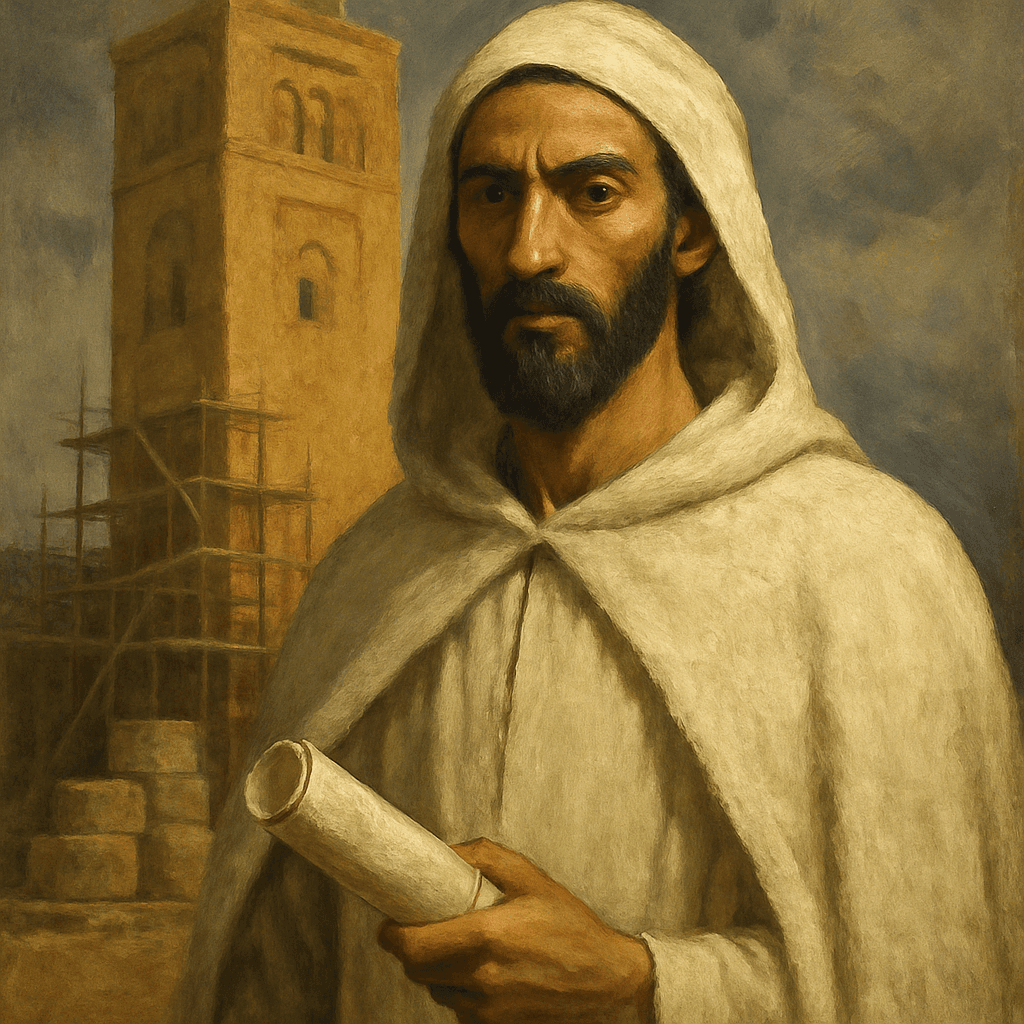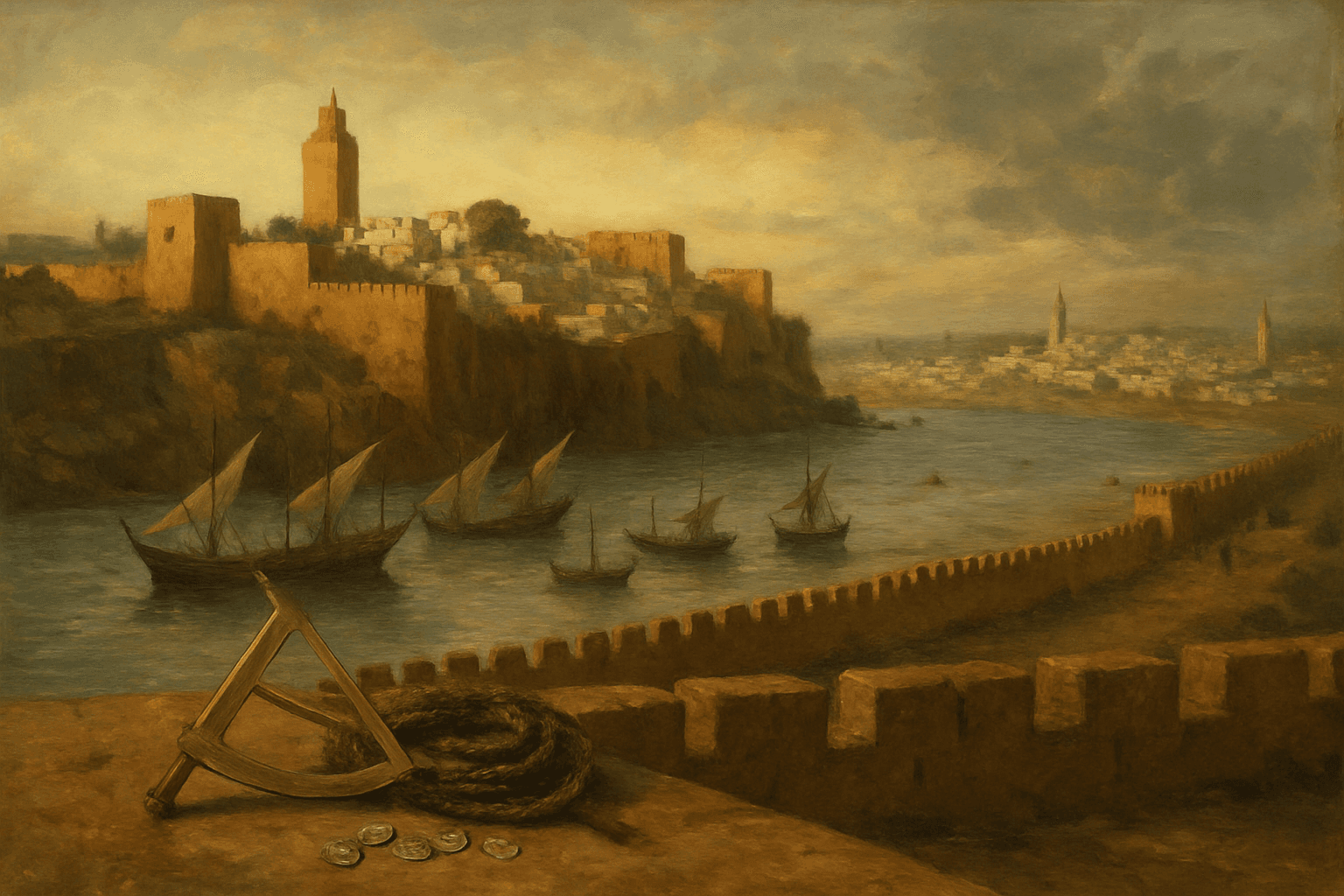
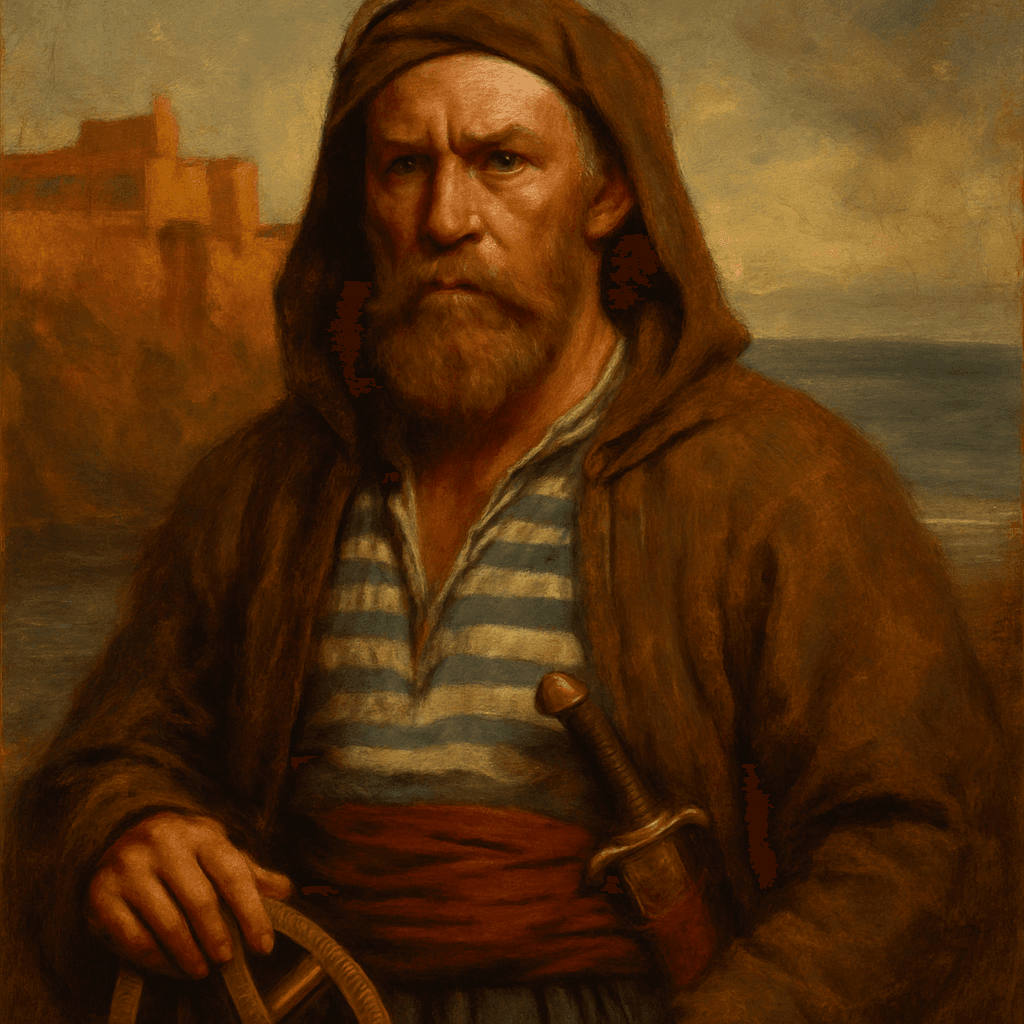
City walk · Medina & Kasbah, Rabat · Morocco
Jan Janszoon (Murat Reis the Younger)
c. 1570–c. 1641 · a real person
a weathered 17th-century corsair admiral, Dutch-born, salt-dry and unsentimental, still amazed that the town he raided from has become a capital
Read what Jan Janszoon (Murat Reis the Younger) says
They called me Murat Reis, and before that my mother called me Jan, and between those two names lies a sea I never crossed back. Four hundred years ago I kept the fleet at the mouth of this river, and the town you are standing in paid for its bread with what we took. I have walked up from the water to find my old harbour and I cannot recognise a single street — glass, motorcars, a house where men argue instead of a divan of captains. Walk north with me and I will tell you what stood here before, and what it cost. Keep your eyes open; the old city is still in the stones, it is only wearing new clothes.
Medina & Kasbah · 7 stops · 1.7 km
about 36 min walking, 28 min listening at the stops — going inside is extra · Tap a stop on the map for a preview.


64 min · 1.7 km · 7 stops · medium
You’re walking this one before anyone at Walk & Tell has. If something looks wrong, tap Report at any stop — we’ll fix it for everyone after you.
The walk
Rabat looks like a capital of ministries and boulevards, but underneath it is a corsair town: a 17th-century republic of exiles, refugees and sea-raiders at the mouth of the Bou Regreg. This walk climbs from the modern parliament, past the coin vaults and the theatre, through the Andalusian wall the Morisco exiles raised, and up to the Kasbah of the Udayas where the pirate captains kept their lookout. There are no puzzles here — only a voice, a route, and things to notice with your eyes. It ends where the river meets the Atlantic, which is where every story in this town ends.
Start here
Rue Taïf زنقة الطائف, Océan ⵍⵎⵓⵃⵉⵟ المحيط
Stand on the wide pavement of Avenue Mohammed V facing the long colonnaded front of the Moroccan Parliament, at the southern end of the avenue. Keep the building on your right and you'll be walking north for the whole game.
Directions