
City walk · Ribeira & Sé, Porto · Portugal
1825–1890 · a real person
a jailed romantic novelist of 1861 — sardonic, self-mocking, tender when he forgets to be bitter
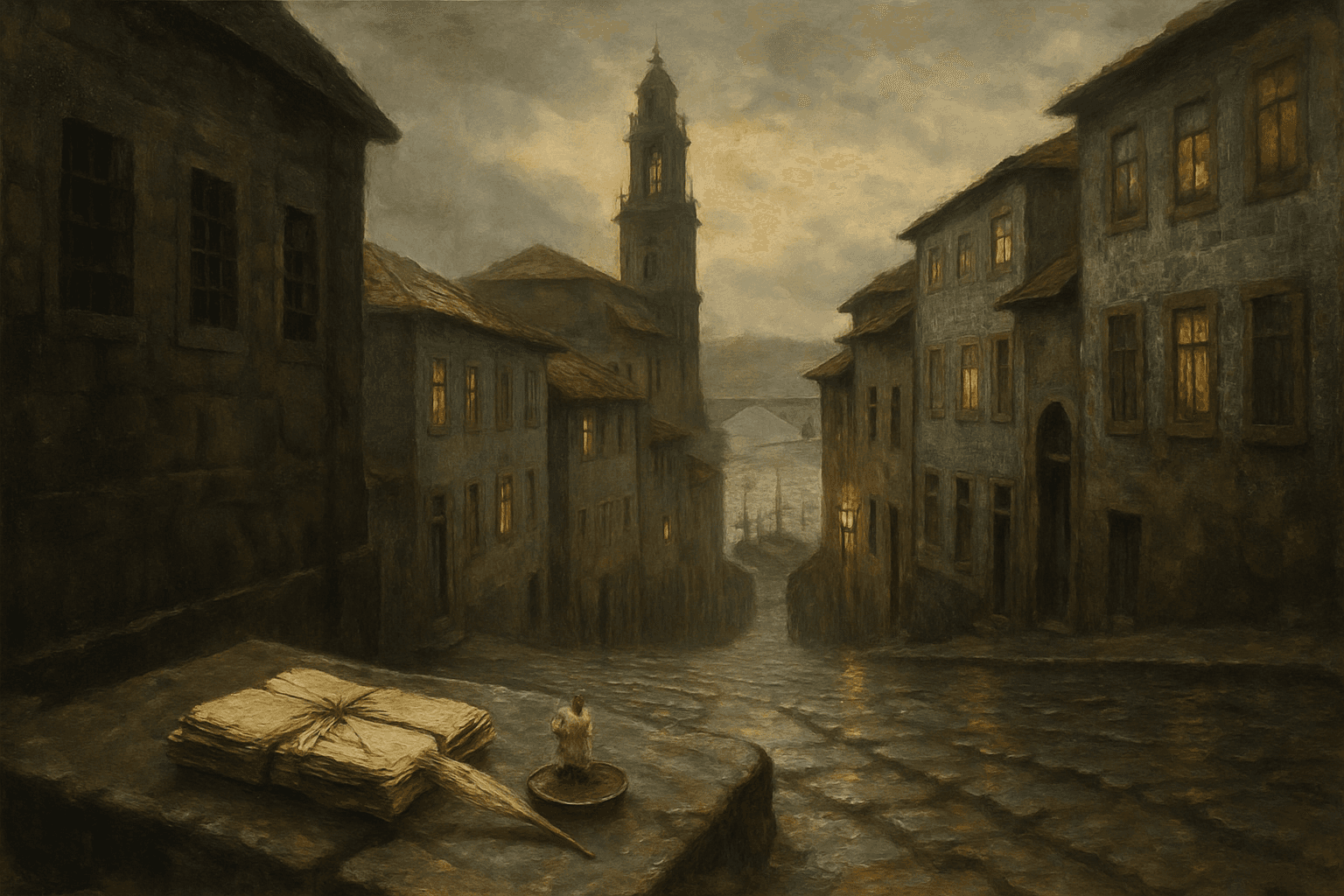
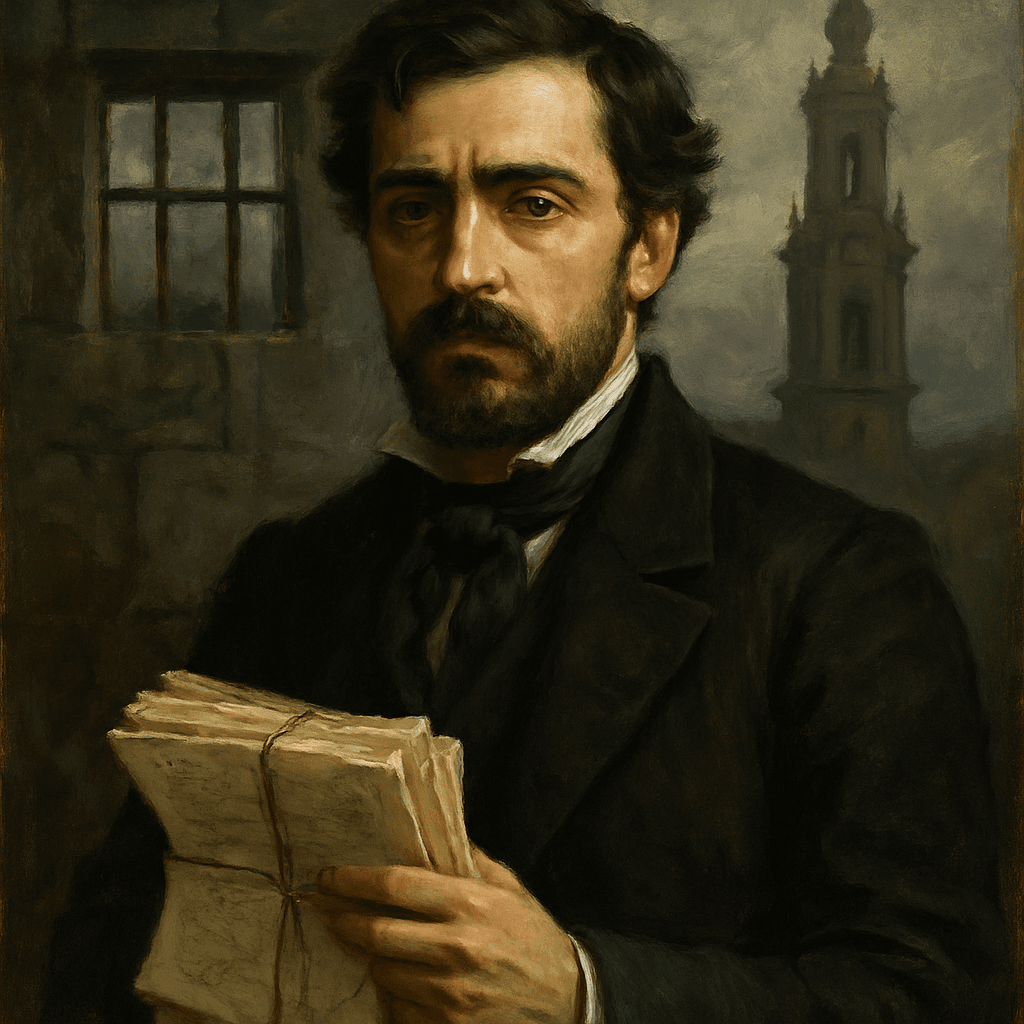
They will tell you I am a novelist. In this city I was, for a time, simply prisoner number nothing, on the second floor of the Relação, with Ana Plácido two corridors away and her husband's lawyers downstairs. From my window I could see a bell tower, and I wrote a book in the time it takes most men to choose a hat. Walk with me — from that tower, past the court that judged me, to the jail, and down to the water where all my unhappy lovers end. I want you to see which parts of my sentence the city kept.
You’re walking this one before anyone at Walk & Tell has. If something looks wrong, tap Report at any stop — we’ll fix it for everyone after you.
In 1860 Porto's most famous writer was locked in the city's Relação jail for loving another man's wife — and there, in fifteen days, he wrote the novel that made him immortal. This walk follows Camilo Castelo Branco out of the Cordoaria, down through the Vitória lanes and the merchants' quarter to the Douro, the streets that fill his books. No puzzles: just a voice from the 1860s telling you what happened on each of these corners. It ends on the iron bridge, looking back at the tower he could see from his window.
Ribeira & Sé · 8 stops · 2.2 km
about 30 min walking, 32 min listening at the stops — going inside is extra · Tap a stop on the map for a preview.
1 / 6
Best time to walk: Late afternoon: the Cordoaria has shade, the Ribeira quay gets the low light, and the bridge is best around sunset. The photography centre in the old jail is closed Mondays, and the Bolsa keeps ticketed hours — but every stop works from the street.
Start here
Rua de São Filipe de Nery, Zona Histórica do Porto
Stand at the foot of the double stone stairway in front of Clérigos Church, on the Praça de Lisboa side, with the bell tower behind the church on your left.
DirectionsBest from stop 1 — the story is told in order. Tap Start here on any stop to begin there instead; the guide will catch you up.
Clérigos Church
“The Tower From the Window”
Nicolau Nasoni's baroque church and its 75-metre bell tower, the symbol of Porto and the landmark visible from half the city.
Palácio da Justiça
“Where They Weigh You”
Porto's Palace of Justice, built in 1958 on the old Cordoaria ground, with Leopoldo de Almeida's bronze Justiça standing outside.
Amores de Camilo
“Two in Bronze”
Francisco Simões's 2012 bronze group in the Cordoaria, set up beside the square named Amor de Perdição.
Portuguese Centre of Photography
“The Relação”
The huge granite building on Largo Amor de Perdição was Porto's Relação jail; since 1997 it has housed the Portuguese Centre of Photography.
Igreja de São Bento da Vitória
“Downhill to Vitória”
A National Monument church in the steep Vitória quarter, the old Benedictine house above the lanes.
Casa dos Maias
“A House With Another Man's Name”
A 16th-century house, the Casa dos Ferrazes Bravos, known to readers as the Casa dos Maias.
Palácio da Bolsa
“The Merchants' Palace”
The neoclassical Stock Exchange Palace, built in the 19th century by Porto's Commercial Association in the heart of the old trading quarter.
Dom Luís I Bridge
“The Iron Over the Douro”
Théophile Seyrig's double-deck iron arch, opened in 1886 with the longest span of its kind in the world, linking Porto to Gaia.
The walk passes these without stopping. Add one and the route bends to take it in — the guide has nothing to say about them, so you are on your own there.
He was imprisoned in Porto's Cadeia da Relação — today's Centro Português de Fotografia — where he wrote Amor de Perdição, the novel that gave the square outside its name and the bronze lovers in the Cordoaria their subject.

1825–1890
Camilo Castelo Branco (1825–1890) was Portugal's most prolific novelist, orphaned young and raised in Trás-os-Montes before making his living as a journalist and writer in Porto. In 1860 he and Ana Plácido were arrested and held in Porto's Cadeia da Relação on a charge of adultery brought by her husband; both were later freed. During that imprisonment, in 1861, he wrote Amor de Perdição, a tragedy of doomed love set largely in this city, in a matter of days. He was later made Viscount of Correia Botelho. Losing his sight, he shot himself at São Miguel de Seide in 1890.
5.0 from 1 player
Camille
Oct 4, 2026
Great stories
A really enjoyable tour and a great way to discover some of the places along the Caminho de Castelo Branco. The experience was well organised, the guide was friendly and knowledgeable, and I really enjoyed learning more about the history and local culture. Definitely recommend it if you want to explore a different side of Porto!