City walk · Paris · France
Élodie
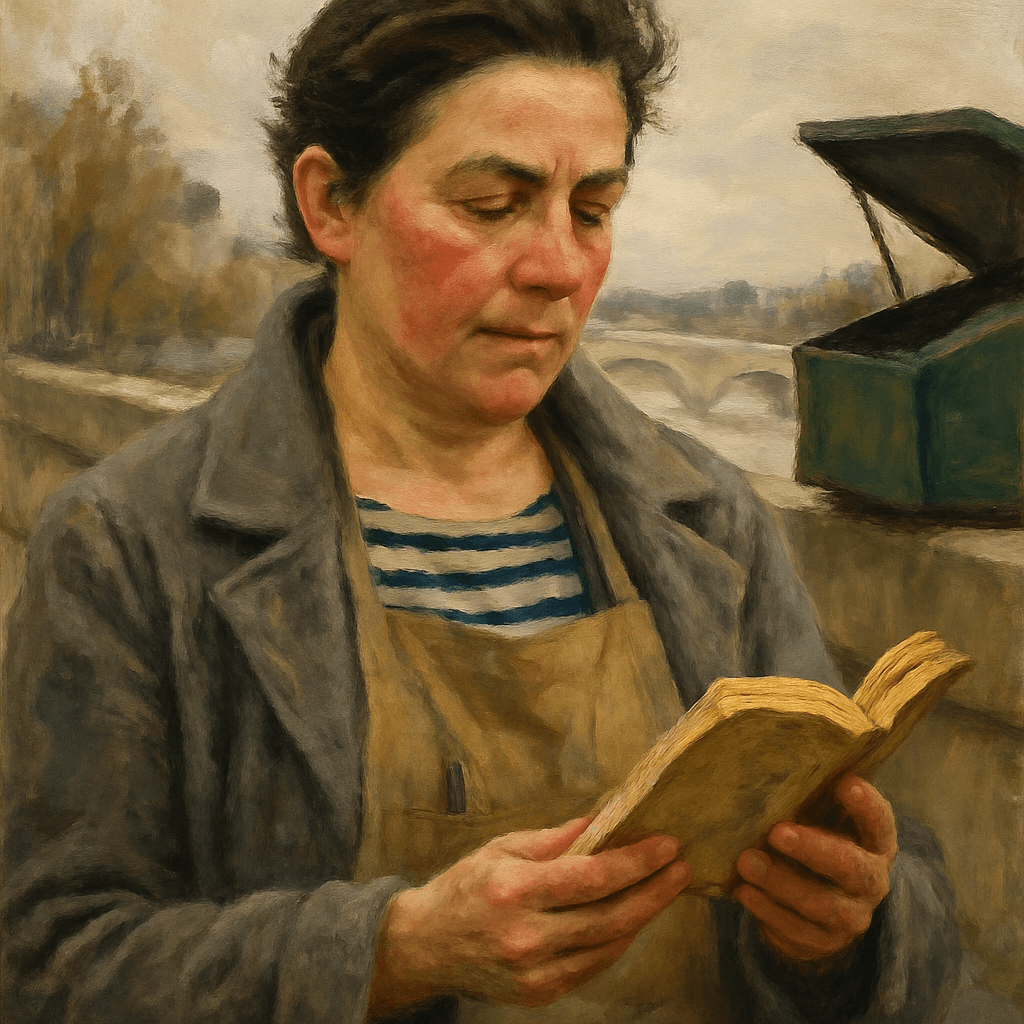
a Paris bouquiniste in her forties, dry, generous, allergic to queues and to brochure language
Read what Élodie says
I am Élodie. I sell second-hand books from a green metal box on the wall above the river, a few minutes from where you are standing. Most days I watch visitors run between four famous places and see nothing in between, which is where Paris actually lives. So today we walk one line, slowly: the museum, the square, the garden, the opera, the palace, the bridge. No questions to answer — just walk with me and look where I point.
Paris · 8 stops · 4.6 km
about 76 min walking, 40 min listening at the stops — going inside is extra · Tap a stop on the map for a preview.
Where it takes you
1 / 6


Best time to walk: Start by 9am or after 4pm: the Tuileries and Concorde have almost no shade at midday, and the Louvre courtyard is calmest in the last two hours. The Musée d'Orsay is closed on Mondays, the Louvre on Tuesdays.
116 min · 4.6 km · 8 stops · medium
You’re walking this one before anyone at Walk & Tell has. If something looks wrong, tap Report at any stop — we’ll fix it for everyone after you.
Partly shadedBest time to walk: Start by 9am or after 4pm: the Tuileries and Concorde have almost no shade at midday, and the Louvre courtyard is calmest in the last two hours. The Musée d'Orsay is closed on Mondays, the Louvre on Tuesdays.
The walk
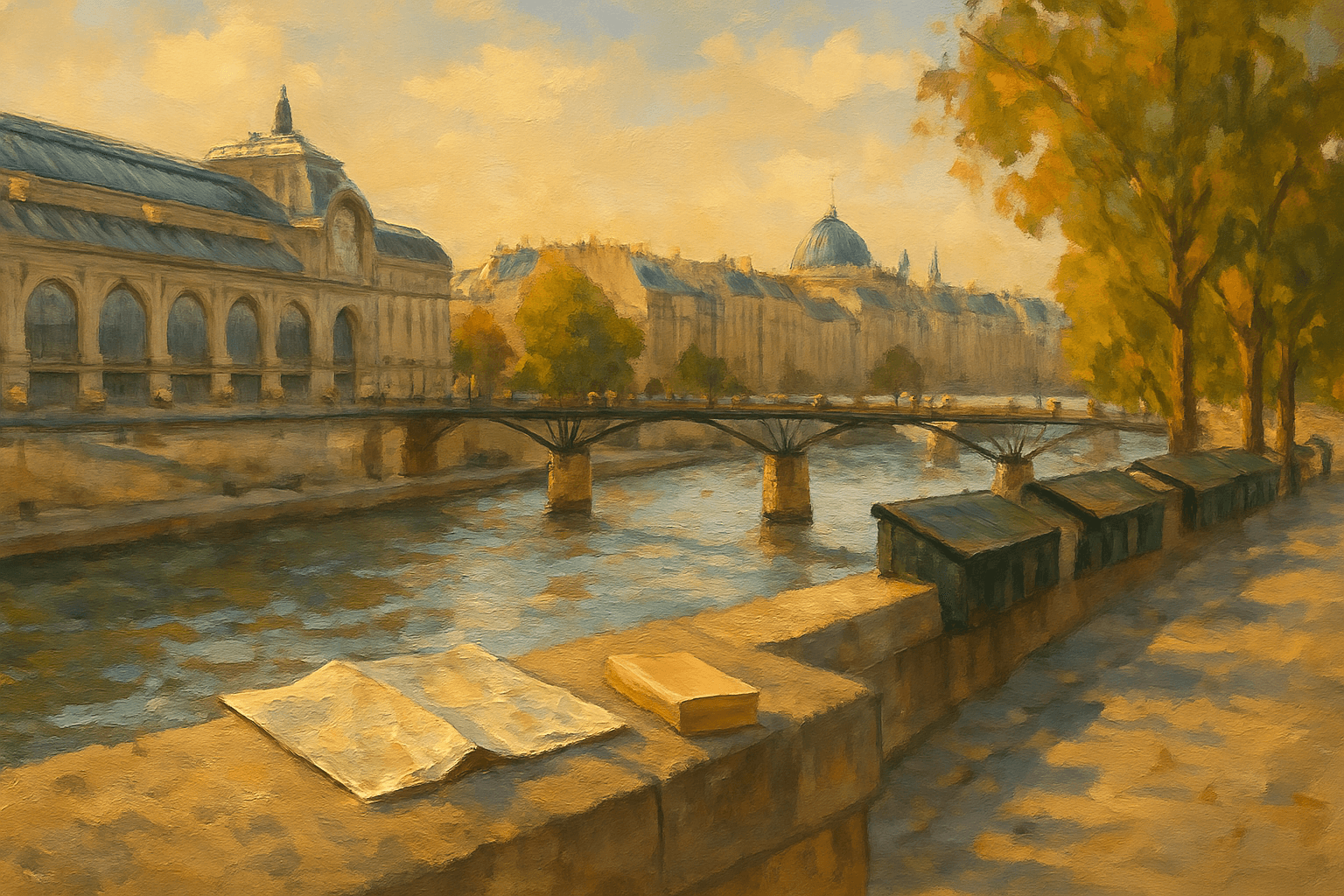
A single walking line from the old railway station that became the Musée d'Orsay, across the river to the largest square in Paris, up through the Tuileries to the opera house, then back down to the Louvre and the footbridge over the Seine. The big sights are all here, and beside each one is something most visitors walk straight past: a bronze rhinoceros, a plaque for a girl wounded at a vanished gate, a museum of chairs and wallpaper next door to the world's most crowded gallery. Your guide is a riverside bookseller who has sold paperbacks on this bank for twenty years and has firm opinions about queues. No puzzles: just walking, looking and listening.
Start here
Quai Valéry Giscard d'Estaing, Paris 7e Arrondissement
Stand on the river side of the Musée d'Orsay, on the wide pavement facing the Seine, with the long glass-roofed building behind you.
Directions