
City walk · Paris · France
1802–1885 · a real person
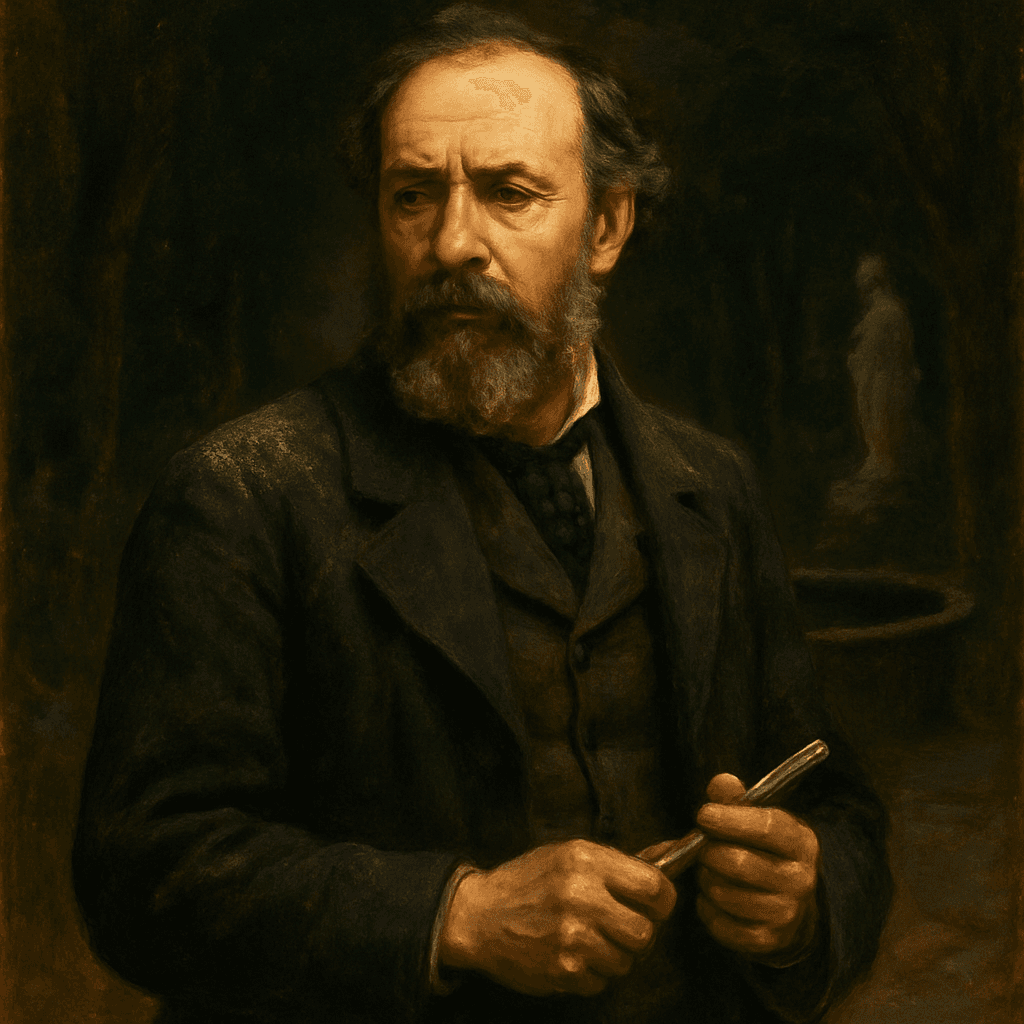
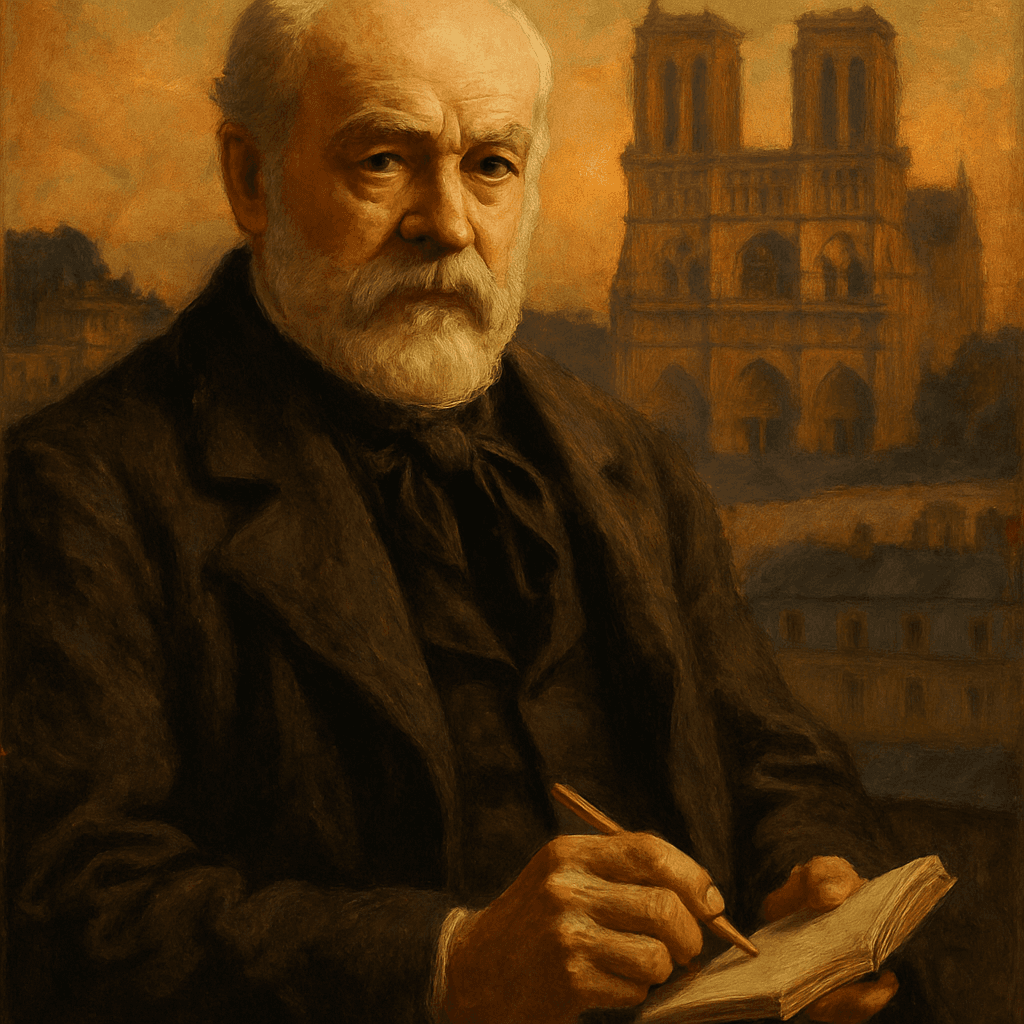
an old, grand, tender republican writer; theatrical when he speaks of stone, very quiet when he speaks of his daughter
I am Victor Hugo, and I wrote a novel because a building was dying. They were selling off her glass and whitewashing her saints, and nobody looked up. So I put a hunchback in her towers and made Paris read. Walk with me from this stone star out to the iron tower and the hill beyond, and I will show you what the city kept, what it lost, and what it did with me at the end.
You’re walking this one before anyone at Walk & Tell has. If something looks wrong, tap Report at any stop — we’ll fix it for everyone after you.
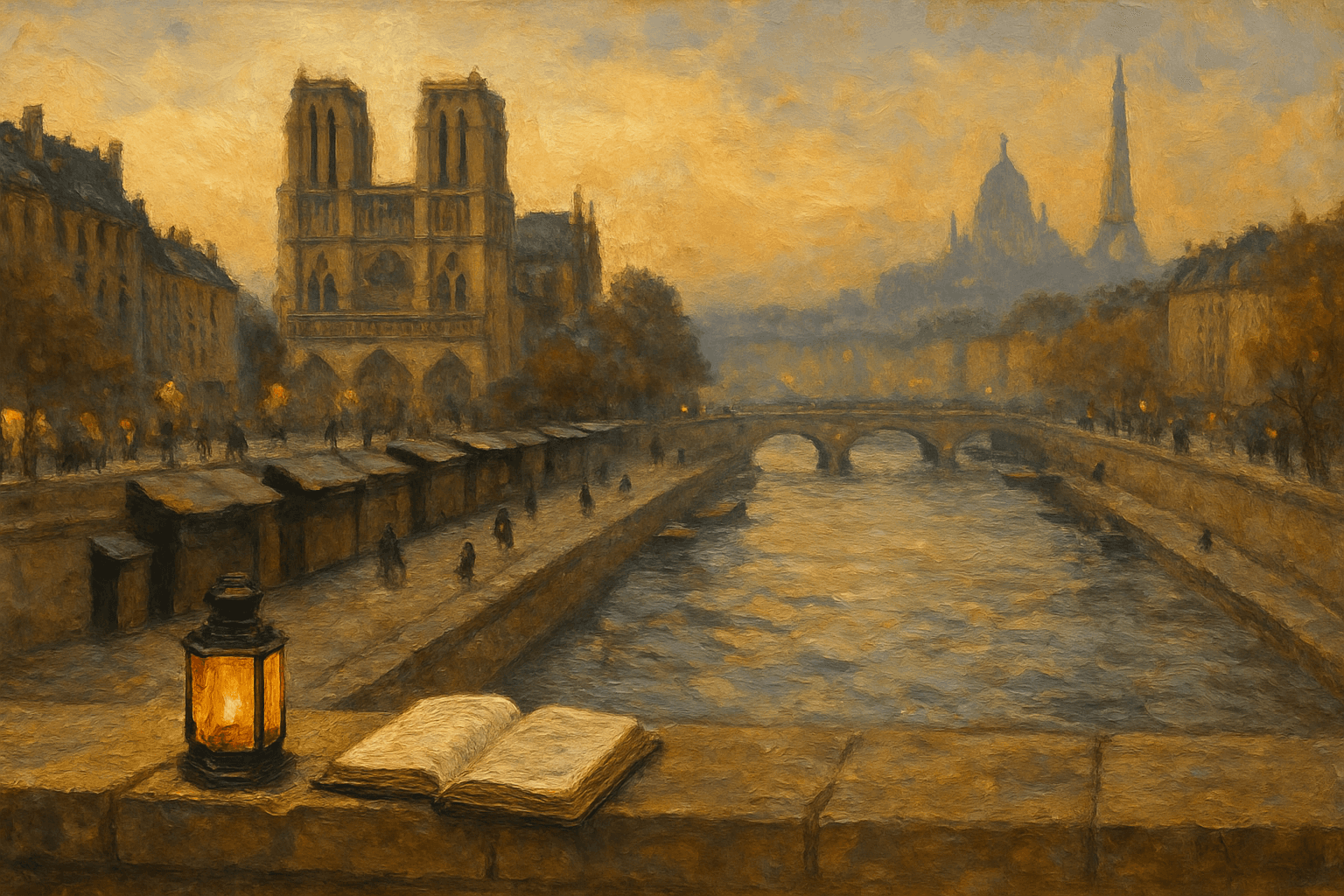
A single line across Paris told by Victor Hugo: from the bronze star in front of Notre-Dame, through the Latin Quarter and the Luxembourg, along the river to the Eiffel Tower, up the Champs-Élysées to the Arc de Triomphe, and finally up the hill to Sacré-Cœur. It is a story walk with no puzzles — at each stop the guide arrives, tells a chapter, and points out one thing to look at. The thread is a novelist who wrote a book to save a crumbling cathedral, lost a daughter to the Seine, spent nineteen years in exile, and whose coffin lay under the Arc de Triomphe while two million people waited in the street. Two short metro or train hops carry you the long stretches.
Start here
Parvis Notre-Dame - Place Jean-Paul II, Paris 4e Arrondissement
Stand on the open square in front of Notre-Dame, on the bronze star set flat into the paving about thirty paces out from the cathedral's two towers.
DirectionsParis · 10 stops · 9.5 km
about 93 min walking, 48 min listening at the stops — going inside is extra · Tap a stop on the map for a preview.
1 / 6
Best time to walk: Start in the morning: the cathedral square, the Champs-Élysées and the steps of Sacré-Cœur have no shade at midday. The Notre-Dame tower climb is ticketed and closed 1 January, 1 May and 25 December; the Musée d'Orsay is shut on Mondays.
Best from stop 1 — the story is told in order. Tap Start here on any stop to begin there instead; the guide will catch you up.
Point zéro des Routes de France
“The Stone Star”
A bronze marker set in the cathedral square from which all road distances to Paris are measured.
Tours de Notre-Dame
“The Towers He Filled”
The twin west towers of Notre-Dame, the ticketed climb up into the cathedral's high galleries.
Shakespeare and Company
“Booksellers of the Left Bank”
The English-language bookshop at 37 rue de la Bûcherie, where thousands of travellers have slept among the shelves.
Saint-Séverin, Paris
“The Students' Church”
A Flamboyant Gothic parish church begun in 1230, the church of the medieval University of Paris.
Place Saint-Michel
“The Square of Barricades”
The busy meeting-square at the foot of the boulevard, the traditional gathering point of student Paris.
Thermes de Cluny
“Roman Water”
The ruined Gallo-Roman baths of Cluny, the oldest surviving walls in this quarter.
Panthéon
“Where They Put Me”
The vast neoclassical mausoleum on the hill, where France's honoured dead lie, Hugo among them.
Jardin du Luxembourg
“The Bench in the Garden”
Gravel walks, green chairs and a model-boat pond, laid out for Marie de' Medici from 1612.
Louvre Museum
Louvre Museum: one of the places Paris is known for.
Musée d'Orsay
“The Station on the River”
A Beaux-Arts railway station of 1898–1900, since 1986 the great museum of 1848–1914 painting.
The walk passes these without stopping. Add one and the route bends to take it in — the guide has nothing to say about them, so you are on your own there.
Hugo's novel Notre-Dame de Paris (1831) made Parisians fight to save the decaying cathedral and its towers, he set the young lovers of Les Misérables in the Jardin du Luxembourg, he lost his daughter Léopoldine to the Seine, his coffin lay under the Arc de Triomphe, and he is buried in the Panthéon on this route.

1802–1885
Victor Hugo (1802–1885) was a French poet, novelist and dramatist, and the most famous French writer of the 19th century. His 1831 novel Notre-Dame de Paris was written partly to shame a public that was letting the medieval cathedral fall apart; the campaign it started led to Viollet-le-Duc's restoration. His daughter Léopoldine drowned in the Seine at Villequier in 1843, a loss that marks his later poetry. He opposed Napoleon III's coup of 1851 and lived in exile, mainly in Jersey and Guernsey, until 1870. After his death in 1885 his coffin lay for a night under the Arc de Triomphe and a vast crowd followed it to the Panthéon, where he is buried.
No reviews yet — be the first to walk it.