
Village walk · Volubilis · Morocco
48 BC–AD 23 · a real person
a scholar-king, courteous and dry, half-Roman and half-Berber, fond of olives and suspicious of marble
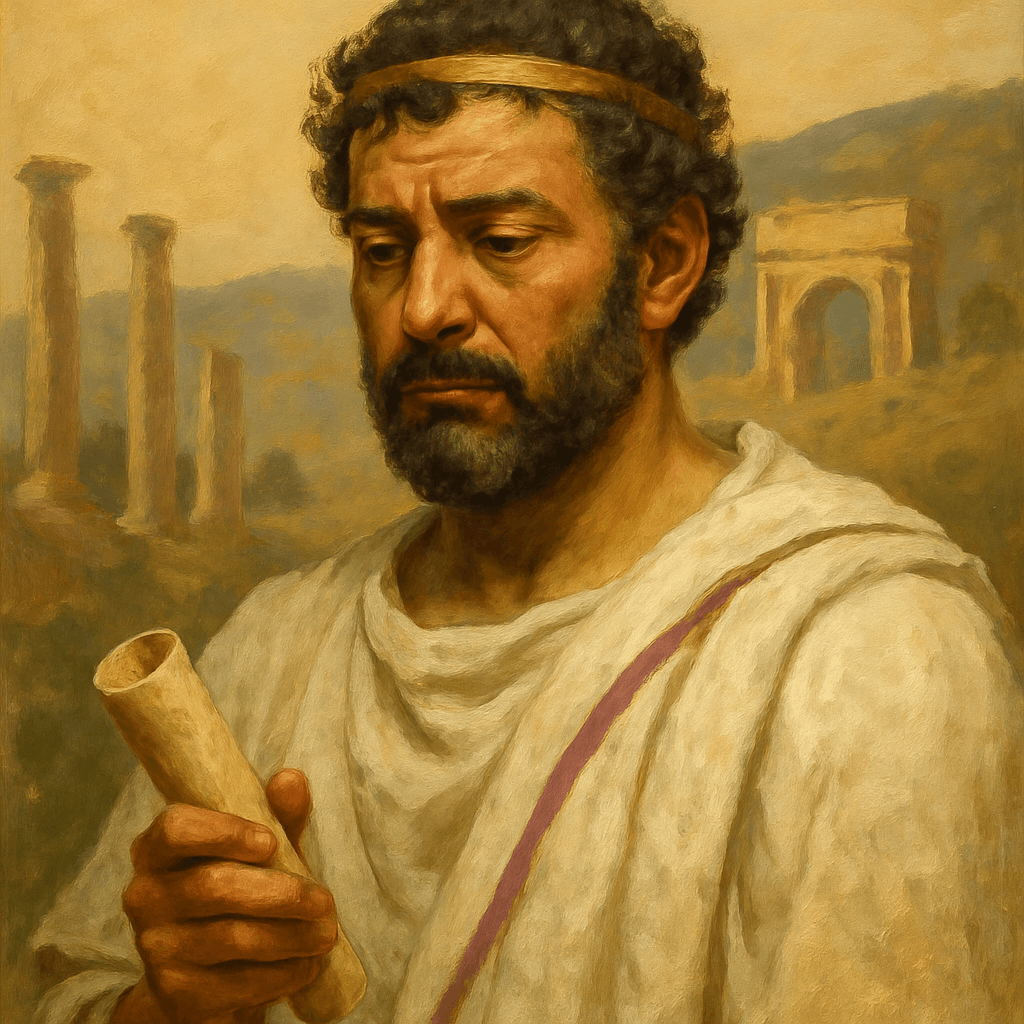
I am Juba, son of Juba, king of Mauretania. Rome raised me, Rome crowned me, and this valley fed me. Walk my city with me; it is broken now, and I want to see what they did with it after I was gone. Nothing to solve today — only to look, and to listen. Follow the stones.
You’re walking this one before anyone at Walk & Tell has. If something looks wrong, tap Report at any stop — we’ll fix it for everyone after you.
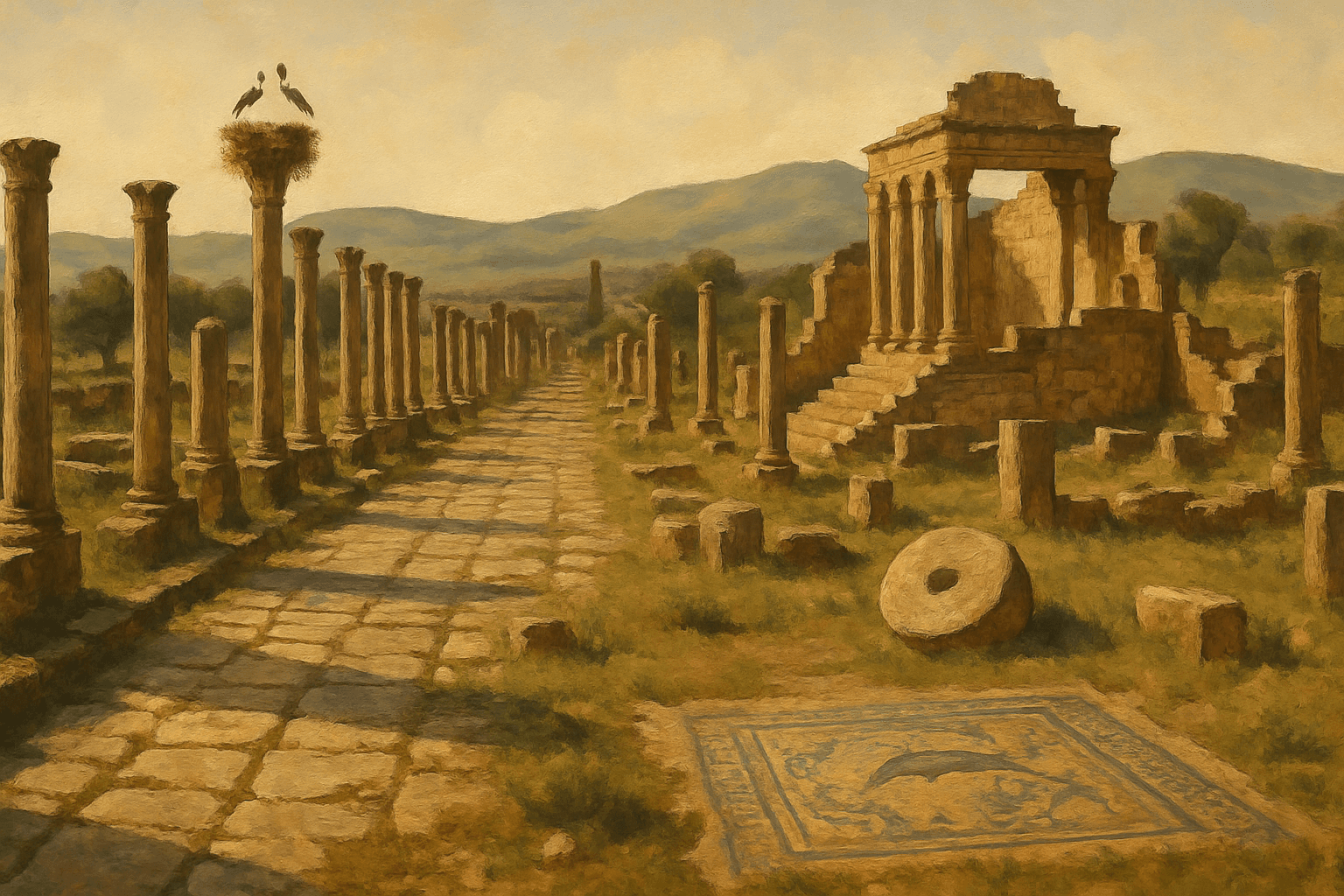
Volubilis is a Berber-Roman city of olive presses, mosaic floors and broken columns above a green valley. This walk crosses it in one line, from the southern villas to the governor's palace and back along the main street to the temple and the House of Orpheus. There are no puzzles: a king who once ruled this country tells you what each ruin was, how it worked, and who was hurt by it. It is the best-preserved Roman city in Morocco, and it is almost entirely open sky.
Volubilis · 8 stops · 1.3 km
about 22 min walking, 38 min listening at the stops — going inside is extra · Tap a stop on the map for a preview.
1 / 6
Best time to walk: Early morning or the last two hours before closing. There is almost no shade at midday, and the low sun shows the mosaics best.
Start here
RP7014
Enter through the site's visitor centre and walk to the southern group of ruined houses below the main street, where the first walled villa plots begin.
DirectionsBest from stop 1 — the story is told in order. Tap Start here on any stop to begin there instead; the guide will catch you up.
House of Venus
“The House of Venus”
One of the city's most luxurious houses, with private baths and famous 2nd-century mosaics.
Decomanus Est Ouest
“The Main Street”
The city's main colonnaded street, running between the grand houses.
Gordian palace
“The Gordian Palace”
The largest building in the city, 74 rooms, probably the governor's residence, rebuilt in the mid-3rd century.
The House of the Ephebe
A villa named for the bronze statue found inside, with a courtyard and mosaic rooms.
The Basilica
The city's law court and civic hall, its tall arcaded walls still standing beside the forum.
Templo Capitolino
“The Capitoline Temple”
The temple of Jupiter, Juno and Minerva, raised on its stair beside the forum.
The House of Orpheus
A southern villa floored with a great mosaic of Orpheus playing to trees, animals and birds.
Volubilis
“The Southern Quarter”
The working end of Volubilis — small houses, oil presses and workshops where the people who pressed the oil actually lived.
Juba II ruled Mauretania, the kingdom whose capital may have been Volubilis, and the city grew rich on the olive country he governed.

48 BC–AD 23
Juba II was a Berber prince of Numidia, taken to Rome as a child after his father's defeat and raised there. Rome made him king of Mauretania, and he ruled with his wife Cleopatra Selene, daughter of Cleopatra VII and Mark Antony. He was a scholar as much as a king, writing on geography, history and natural history in Greek. Volubilis may have been a capital of his kingdom; it grew rapidly under Roman rule after his time, on the wealth of olive oil.
5.0 from 1 player
Christine
Sep 23, 2026
Great storiesGood routeClues were clear