
City walk · Venice · Italy
1697–1768 · a real person
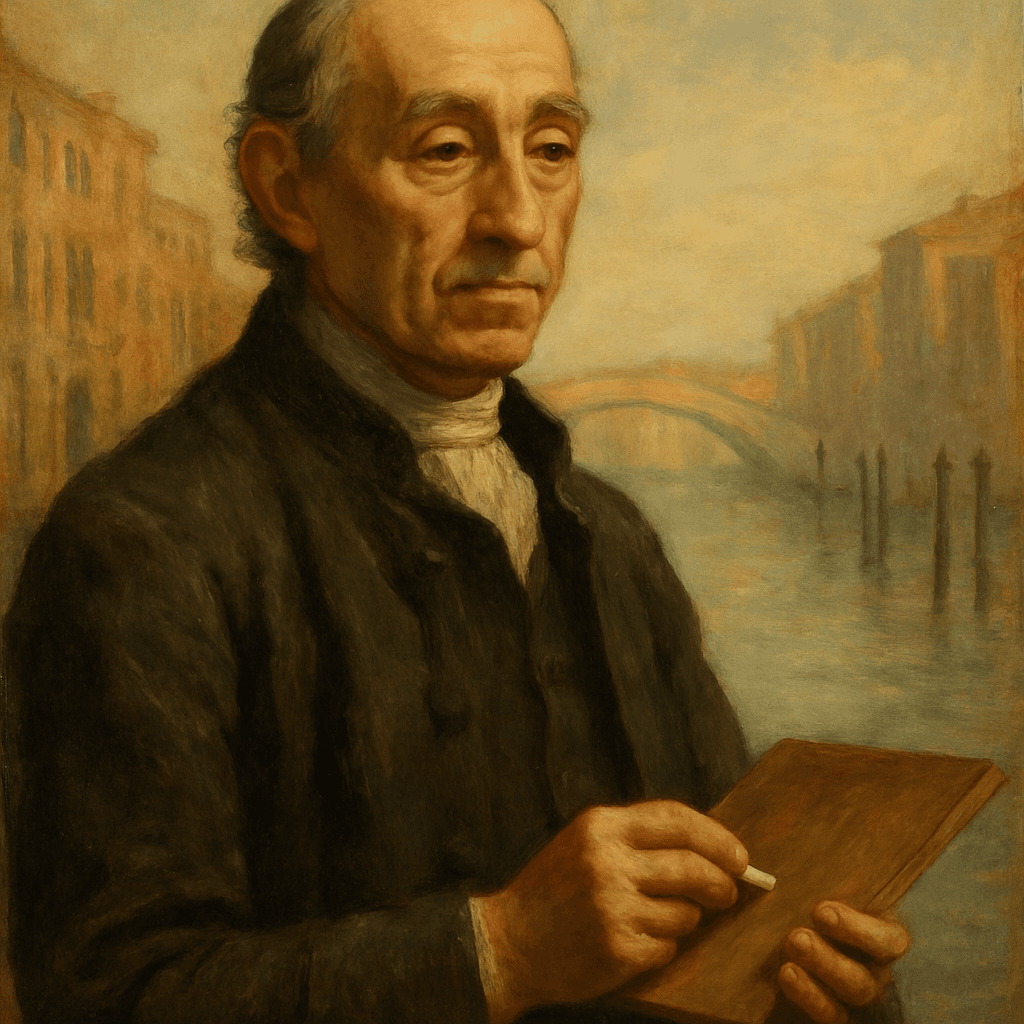
a working painter in his sixties: dry, practical about money, tender about light, quietly proud and a little tired of tourists
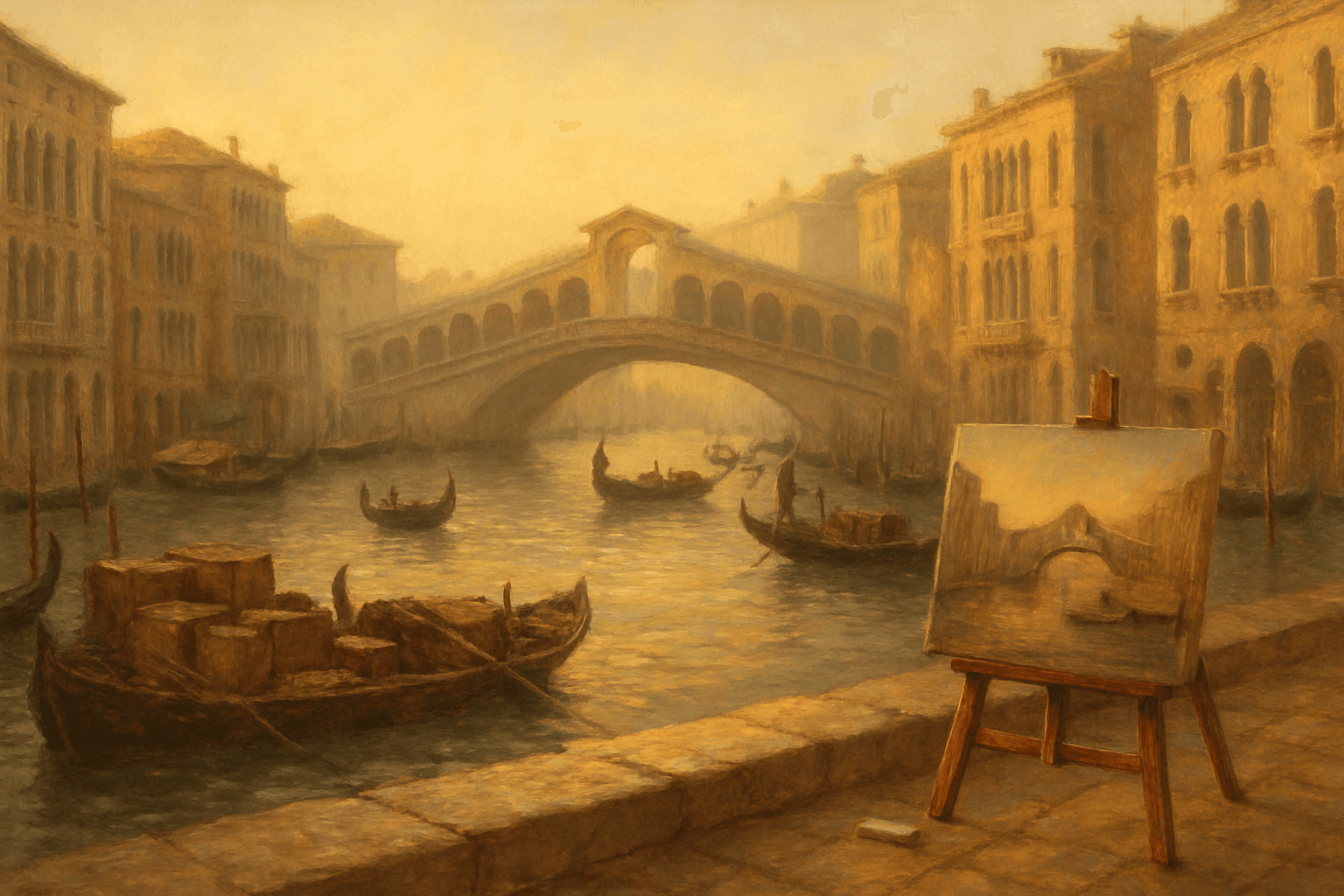
I am Antonio Canal. In Venice they call me Canaletto, the little Canal, as if I were a ditch. For forty years I sold this city to foreigners, one view at a time, and I learned her by the hour of the day. Walk with me from the fish market to the far bank, and I will show you what I looked at and what I left out. Bring your eyes; that is all the equipment I ever needed.
You’re walking this one before anyone at Walk & Tell has. If something looks wrong, tap Report at any stop — we’ll fix it for everyone after you.
About 253 m of this route is by boat, not on foot — you’ll need a ticket and the boat’s timetable. The rest is walking.
Venice told by the man who sold her likeness to strangers: Antonio Canal, called Canaletto. The line runs from the morning fish market at Rialto, over the great stone bridge, through Piazza San Marco and past the Doge's Palace, then west to the opera house, the Accademia and the low white palace on the Grand Canal. It is a walk about looking — light, water, stone and the business of turning them into pictures. No puzzles: just a painter talking while you walk.
Start here
Mercato del Pesce, Venezia-Murano-Burano
Venice · 10 stops · 3.3 km
about 51 min walking, 47 min listening at the stops — going inside is extra · Tap a stop on the map for a preview.
1 / 6
Best time to walk: Early morning: the Rialto market works before 10am and closes by early afternoon, and Piazza San Marco has almost no shade at midday. Museums shut Mondays or open late; the outdoor stops work any day.
Stand at the Rialto Market, on the San Polo side of the Grand Canal, among the fish and vegetable stalls under the open arcades. Face the water.
Best from stop 1 — the story is told in order. Tap Start here on any stop to begin there instead; the guide will catch you up.
Rialto Market
“The Fish Market at Rialto”
The working market that has fed Venice for nine centuries, still trading under open arcades each morning.
Ponte di Rialto
“The Stone Bridge”
The single-span stone bridge of 1591, lined with shops, the oldest crossing of the Grand Canal.
Interramento Canale
“The Buried Canal”
A carved stone stele recording a canal filled in and a bridge demolished to open a new street in 1837.
St Mark's Basilica
“The Church of Gold”
The doge's own chapel, faced with plundered marble and columns, at the east end of Piazza San Marco.
Doge's Palace
“The Palace of the Government”
The Gothic seat of the Venetian Republic — court, offices and the doge's residence — now a museum.
Bridge of Sighs
“The Covered Bridge”
The enclosed white bridge carrying prisoners from the palace to the new prisons across the canal.
Caffè Florian
“Coffee Under the Arcades”
A coffee house open since 1720 under the arcades of the Procuratie Nuove, still serving on the square.
La Fenice
“The Phoenix Theatre”
Venice's opera house, opened 1792 and rebuilt after fires in 1836 and 1996, on Campo San Fantin.
Gallerie dell'Accademia
“The Academy”
The great gallery of Venetian painting, in the old Scuola and convent of Santa Maria della Carità.
Peggy Guggenheim Collection
“The Unfinished Palace”
The low one-storey palace on the Grand Canal, never completed, now a modern art museum with a bronze rider at the water gate.
The walk passes these without stopping. Add one and the route bends to take it in — the guide has nothing to say about them, so you are on your own there.
He painted the Rialto, the Grand Canal, Piazza San Marco and the Doge's Palace over and over, was elected to the Venetian Academy whose gallery now holds his work, and lived and died in Venice.

1697–1768
Giovanni Antonio Canal, known as Canaletto, was born in Venice in 1697 and trained as a painter of theatre scenery with his father. He turned to view painting, the veduta, and sold his Venetian scenes chiefly to British visitors on the Grand Tour, often through the merchant and consul Joseph Smith. When war cut off his buyers he spent most of the years 1746 to 1755 in England, painting London and country houses. He was elected to the Venetian Academy of Painting and Sculpture in 1763 and died in Venice in 1768.
No reviews yet — be the first to walk it.