
City walk · Marunouchi, Chiyoda · Japan
1432–1486 · a real person
a fifteenth-century warrior-builder, dry and watchful, proud of his earthworks, slow to admit tenderness for what others made of them
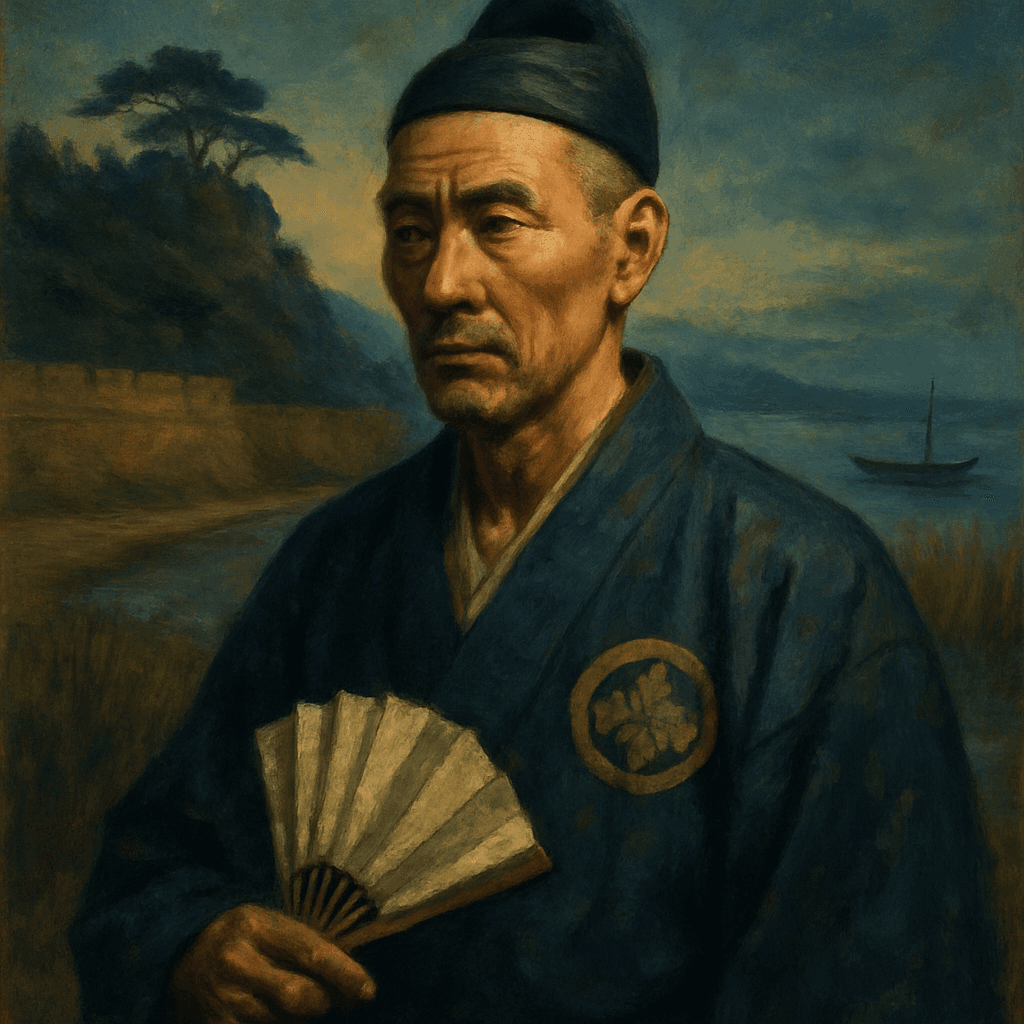
They cast me in bronze and sat me down in Yūrakuchō, facing a city I never saw. I am Ōta Dōkan. In 1457 I put a castle on the bluff above a muddy cove here, and a town gathered under it like smoke under a roof — and then, in 1486, someone I served had me killed, and my town went on without me. I have been given one hour to find out what became of it. Walk with me, because I cannot move from this plinth alone.
You’re walking this one before anyone at Walk & Tell has. If something looks wrong, tap Report at any stop — we’ll fix it for everyone after you.
Marunouchi · 8 stops · 2.9 km
about 56 min walking, 32 min listening at the stops — going inside is extra · Tap a stop on the map for a preview.
1 / 6
Best time to walk: Late afternoon — the Marunouchi avenues are cool by four, Tokyo Station's brick goes warm at sunset, and the Imperial Palace East Garden is closed Mondays and Fridays, so keep to the outer plaza and moats then.
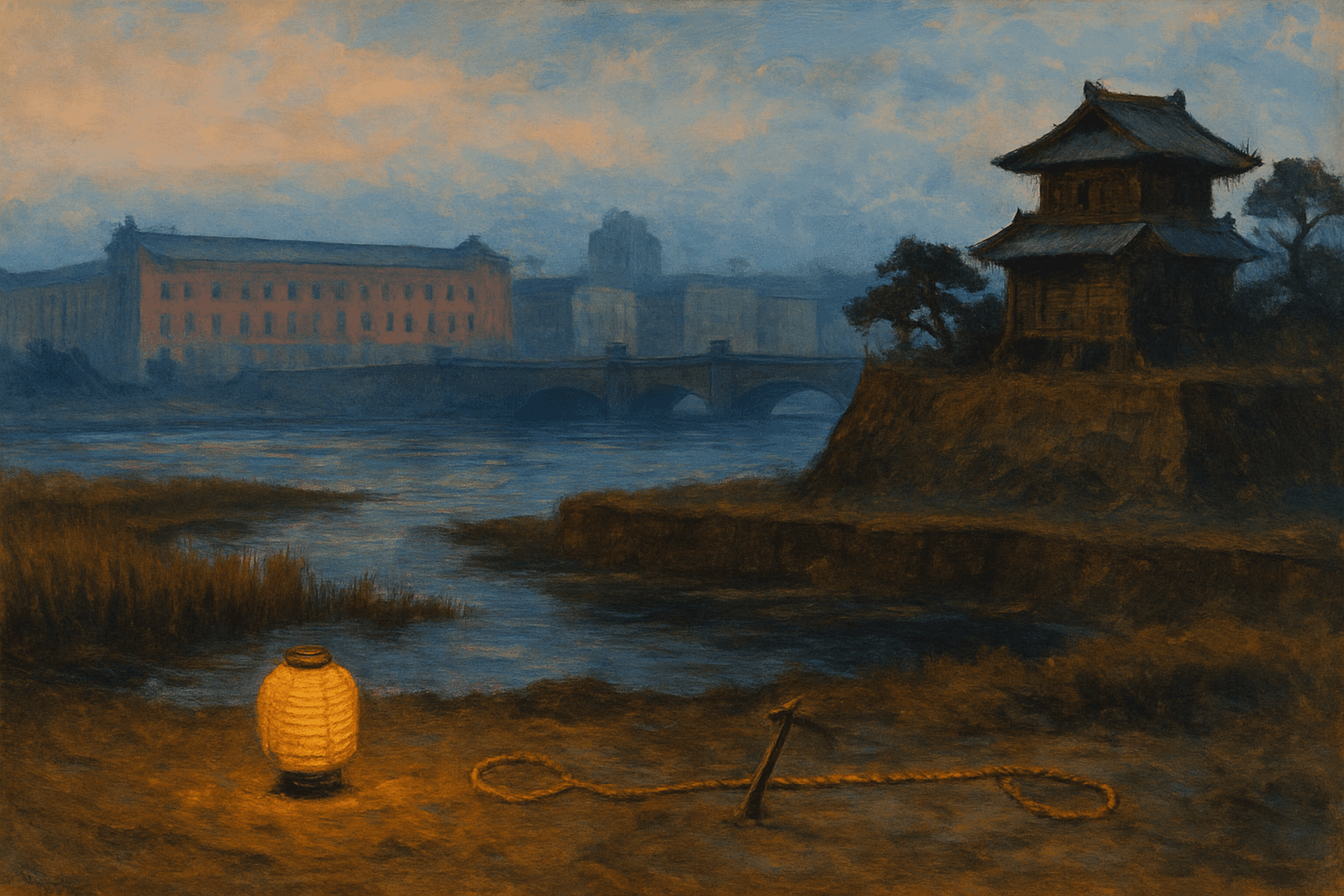
In 1457 a mid-ranking warrior named Ōta Dōkan raised a fort on a bluff above a tidal cove, and a town grew along the creek below it. That cove is now Hibiya, the creek is a road, the sandbar is Tokyo Station, and the fort is the Emperor's garden. This is a talking walk — no puzzles — from a bronze statue in Yūrakuchō, through the red brick and cut stone of Marunouchi, to the moats and walls of the castle itself, told by the man who started it and never lived to see it finished.
Start here
1, 丸の内三丁目
Start on the ground-level plaza of the Tokyo International Forum, by the Yūrakuchō side: find the bronze statue of a seated warrior in court dress on its stone plinth.
DirectionsBest from stop 1 — the story is told in order. Tap Start here on any stop to begin there instead; the guide will catch you up.
太田道灌像
“The Bronze Man on the Plinth”
A 1958 bronze statue of a seated warrior on the Tokyo International Forum plaza, by sculptor Fumio Asakura.
Tokyo International Forum
“Where the Cove Began”
A glass-and-steel exhibition hall in Yūrakuchō, built on the site of the old Tokyo City Hall.
Meiji Seimei Kan
“Cut Stone and Columns”
A monumental 1930s classical office building in Marunouchi, now also home to the Seikadō Bunko Art Museum's gallery.
Tokyo Station train tracks Viewpoint 6F
“Looking Down on the Sandbar”
A sixth-floor viewpoint over Tokyo Station's fan of platforms and tracks.
Tokyo Station
“Red Brick on Old Water”
Japan's busiest rail hub, opened in 1914 to Tatsuno Kingo's design, facing the palace grounds.
C62形蒸気機関車
“The Cold Engine”
The driving wheels of a C62 steam locomotive, displayed in the underground passage below the Marunouchi plaza.
Tokyo Imperial Palace
“An Emperor in My Fort”
The Emperor's residence and gardens, 1.15 sq km on the site of old Edo Castle, with the Nijūbashi bridges on the moat.
Ōte-mon Gate, Edo Castle
“The Stones of 1457”
The surviving moats, ramparts and gate stonework of Edo Castle, built by Ōta Dōkan in 1457 and enlarged by the Tokugawa.
The walk passes these without stopping. Add one and the route bends to take it in — the guide has nothing to say about them, so you are on your own there.
He built Edo Castle in 1457 on the bluff that is now the Imperial Palace, and the town he founded along the cove and the sandbar is today's Yūrakuchō, Marunouchi and Tokyo Station — every stop on this walk stands on his ground.

1432–1486
Ōta Dōkan (1432–1486) was a warrior and administrator, a vassal of the Ōgigayatsu branch of the Uesugi clan. In 1457 he built a castle on the site of the Edo clan's old fortified residence, on the edge of the Musashino Terrace above a cove that is now Hibiya. Under him Edo grew as a jōkamachi — a castle town — spreading along the Hirakawa River and onto Edomaeto, the sandbar east of the cove, roughly where Tokyo Station now stands; priests and scholars fleeing Kyoto after the Ōnin War came there. He lived in the castle until he was assassinated in 1486, and the castle then became a stronghold of the Uesugi clan. He is also remembered as a poet.
5.0 from 1 player
Shiomi
Sep 18, 2026
The distance was just right, and it was a very pleasant walking route. Even as a Japanese person, I enjoyed walking through the city while learning about and experiencing aspects of Tokyo’s history that I would not normally have the opportunity to discover.