
City walk · Namba, Osaka · Japan
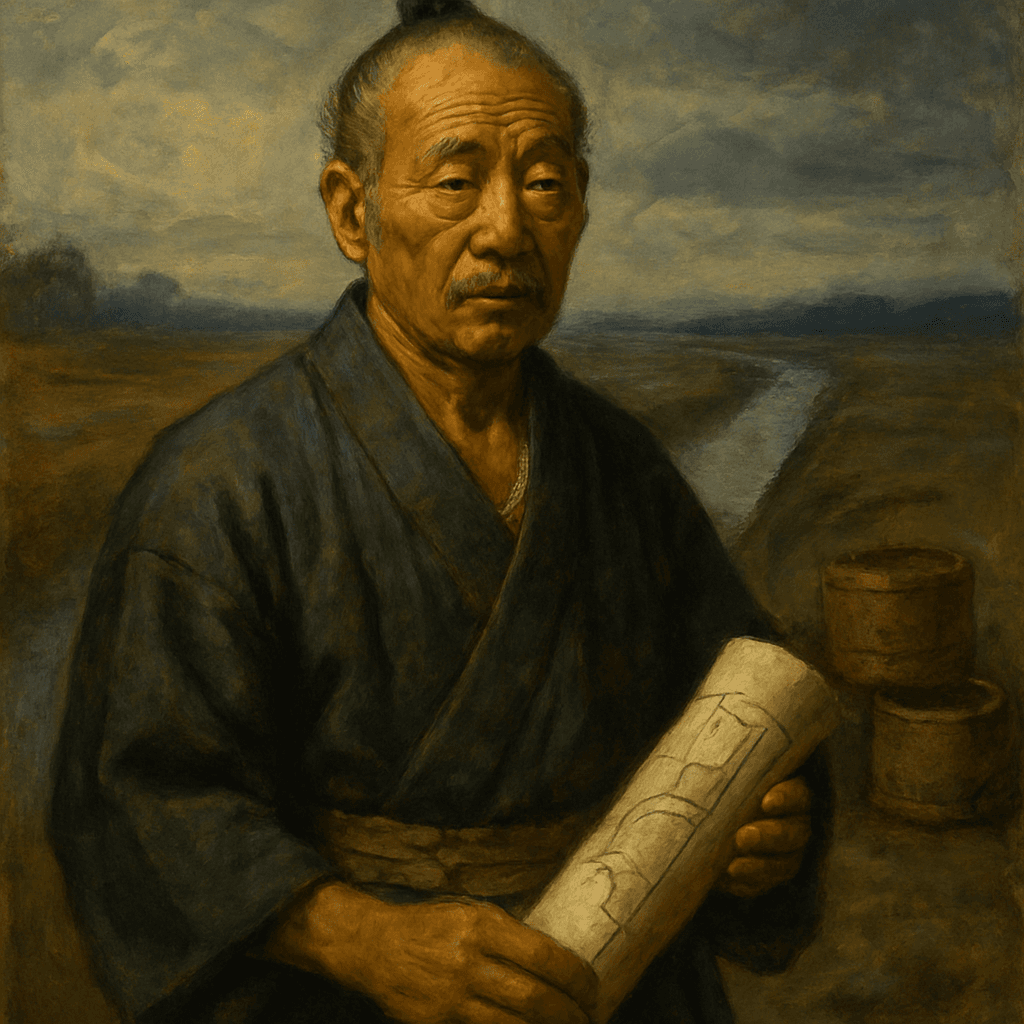
c.1533–1615 · a real person
A blunt, warm Osaka merchant of 1615, proud of his ditch, baffled and delighted by neon
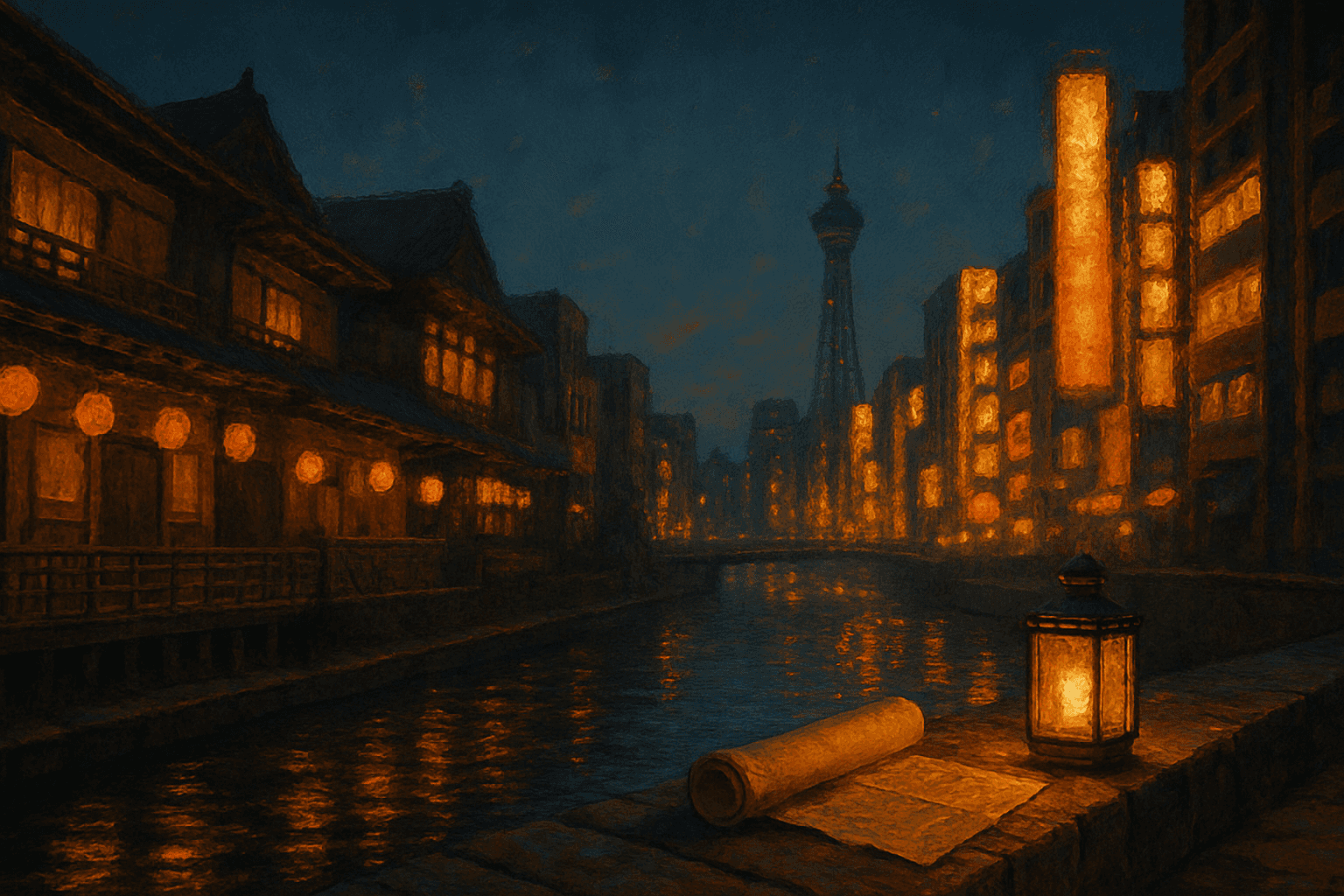
I am Yasui Dōton. I paid men with my own silver to cut a canal through soft ground south of this city, and I did not live to see water run in it. They gave my name to the water and then to the street, and now I understand the street is louder than the water. Walk south with me, from my canal to a tower taller than any castle I ever feared. I want to see what my hole in the ground turned into.
You’re walking this one before anyone at Walk & Tell has. If something looks wrong, tap Report at any stop — we’ll fix it for everyone after you.
A story walk, no puzzles: eleven places strung in one line from the Dotonbori canal to the top of Abeno Harukas. The teller is Yasui Dōton, the Osaka merchant who paid to dig that canal and died in 1615 before a single boat passed along it. On the way you pass a temple alley, a sumo hall, a shrine with a lion's mouth, the city's loudest food market, electric town, and a tower that was meant to reach heaven. It is Osaka's appetite, told by a man who paid for the ditch it all grew beside.
Namba · 8 stops · 4.8 km
about 83 min walking, 32 min listening at the stops — going inside is extra · Tap a stop on the map for a preview.
1 / 6
Best time to walk: Morning for Kuromon Market, which quietens after 3pm; Dotonbori and Shinsekai are best alive after dark, so a late-afternoon start gives you both.
Start here
戎橋筋商店街, 中央区
Begin on the Dotonbori canal walkway at the Ebisubashi bridge, where the Glico billboard faces the water.
Best from stop 1 — the story is told in order. Tap Start here on any stop to begin there instead; the guide will catch you up.
Dotonbori
“The Water With My Name”
The canal and billboard strip that carries the name of the merchant who paid for the digging.
Hozen-ji
“The Moss-Covered Fudō”
A small Jōdo-shū temple in a stone-paved alley, with a statue of Fudō Myōō thickly covered in green moss.
Osaka Prefectural Gymnasium
“Where the Sumo Comes in March”
The hall that hosts Osaka's professional sumo tournament every March, seating 8,000.
Namba Yasaka Jinja
“The Lion That Swallows Bad Luck”
A shrine whose performance stage is built as a giant lion's head with an open mouth.
Swissôtel Nankai Osaka
“A Hotel on Top of a Terminus”
A hotel owned by the Nankai Railway and built directly above Namba Station, the line's city terminus.
Kuromon Market
“Osaka's Kitchen, Still Shouting”
The covered market where Osaka's cooks buy fish, and visitors eat scallops and tuna standing up.
Nipponbashi Denden Town
“Den-Den Town”
The electric and otaku shopping district along Sakaisuji, Osaka's answer to Akihabara.
Tsutenkaku
“The Tower Reaching Heaven”
Shinsekai's 108-metre tower, with an observation deck at 91 metres and neon that signals the weather.
The walk passes these without stopping. Add one and the route bends to take it in — the guide has nothing to say about them, so you are on your own there.
He financed and began the canal that became Dōtonbori, and he died in the 1615 Siege of Osaka, the same war that ended at Tennōji where this walk goes.

c.1533–1615
Yasui Dōton was an Osaka merchant and landholder of the late sixteenth century. He put his own money into digging a canal south of the city to link the Umezu river system with the moat trade of Osaka, work begun in the early 1610s. He died in 1615 during the Siege of Osaka, before the canal was finished. His relatives completed it, and the Tokugawa governor ordered the waterway and its district named Dōtonbori in his memory; the theatres that made the name famous came after his death.
5.0 from 1 player
ライアン慶子
Oct 16, 2026
Great stories
A Great Way to Explore Osaka! I enjoyed exploring Osaka with this walking tour. It took me to a variety of interesting places, from the famous Glico sign in Dotonbori to Hozenji Temple, Kuromon Market, and the lively Shinsekai area near Tsutenkaku Tower. One of the most interesting parts was learning about Japanese culture and history. Even as a Japanese person, I discovered things I didn’t know before! The tour offers a nice mix of famous landmarks, local food, traditional culture, and lively shopping streets. My advice is to allow plenty of time for the walk, wear comfortable shoes, and be prepared to explore at your own pace. There are so many things to see, photograph, and taste along the way, so it’s worth taking your time rather than rushing from one stop to another. Overall, it’s a fun way to discover different sides of Osaka and enjoy the city beyond its most famous attractions. I would recommend it to visitors who want to explore Osaka on foot and experience its unique atm