
Town walk · Ksar of Ait-Ben-Haddou, Aït Benhaddou · Morocco
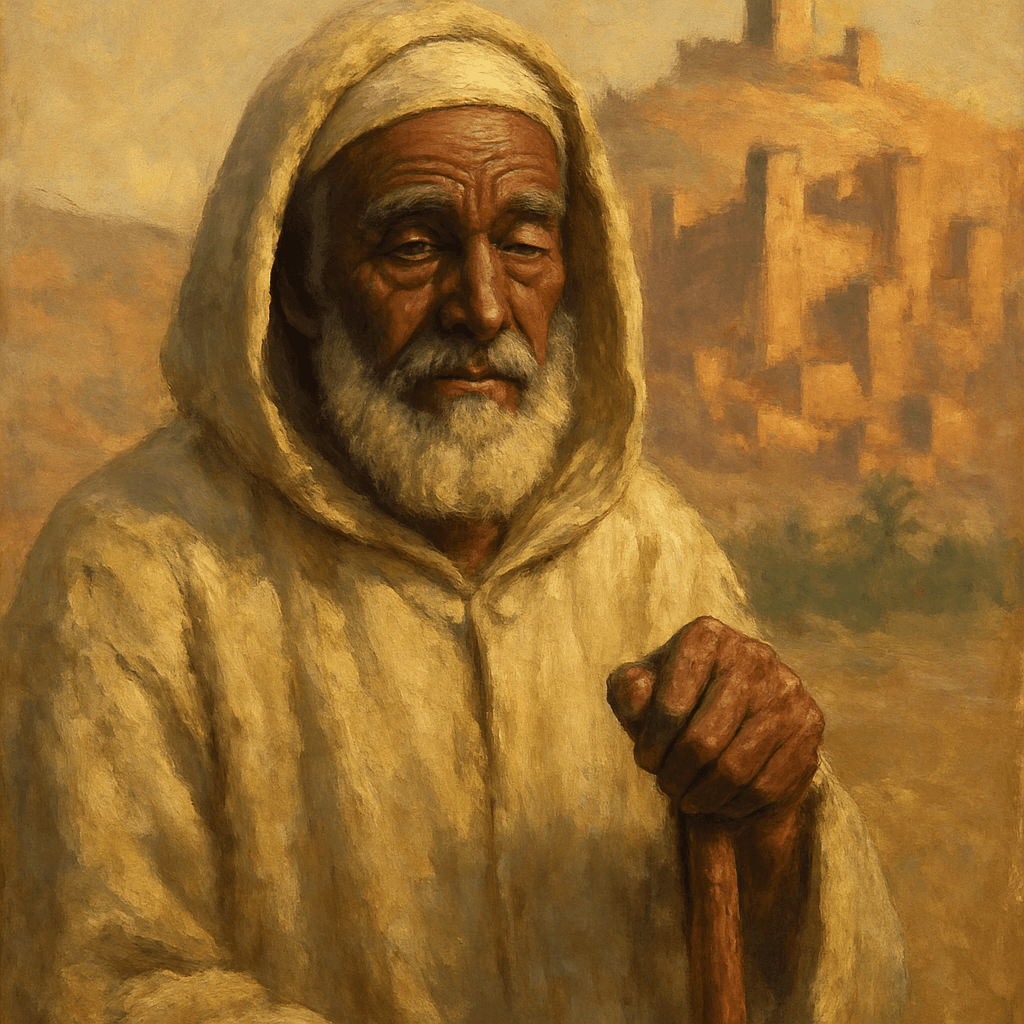
an old marabout, slow and dry, speaking in blessings and small jokes, fond of mud and suspicious of visitors
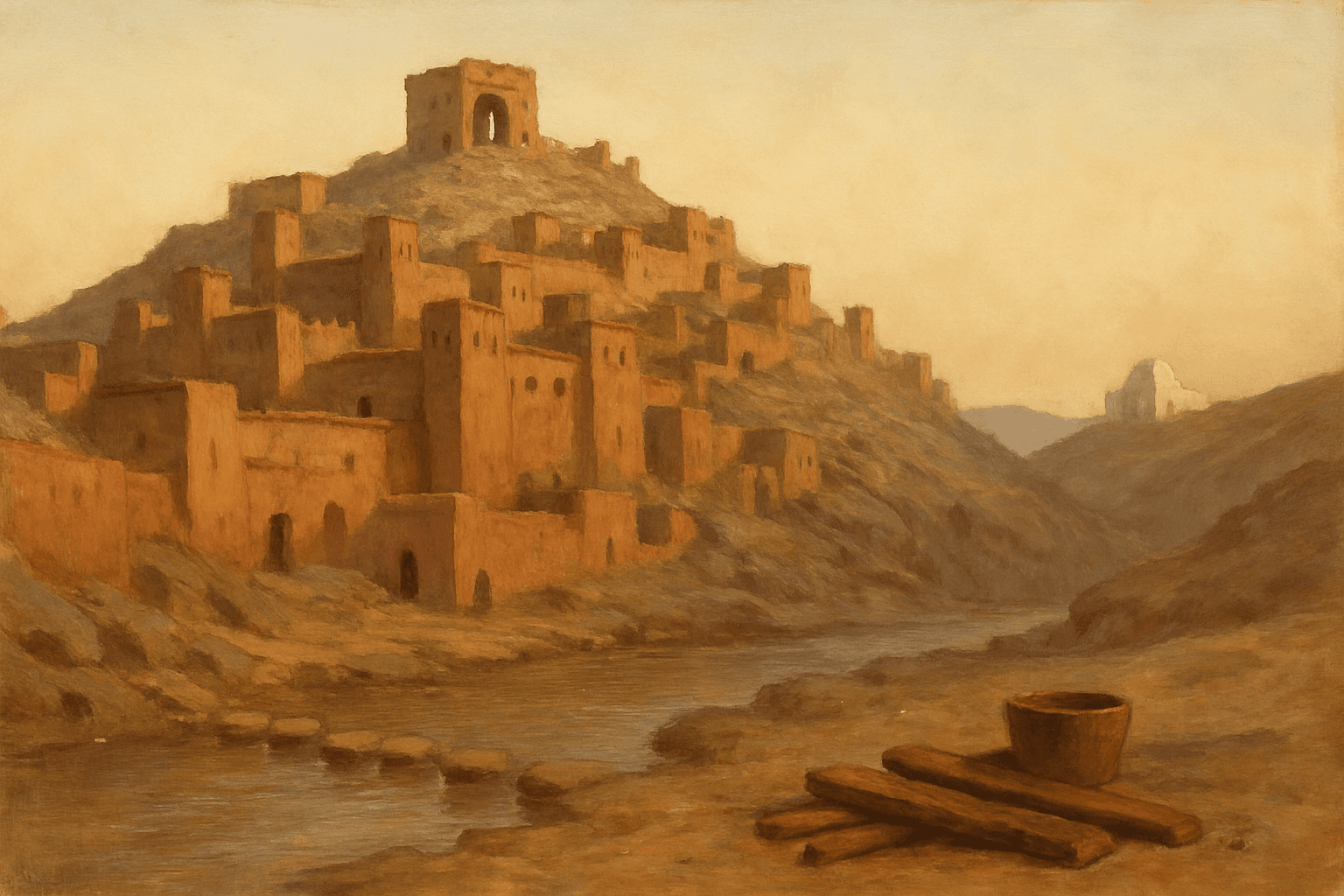
Peace be with you. I am Sidi Ali ou Amar; my body lies up the slope north of this village, under white plaster, and my name is on the tomb so nobody forgets to greet me. For a long time I watched the caravans come up from the Sahara with salt and go down to Marrakesh with dates, and I watched these walls built and rebuilt from the river's own mud. Now the caravans are gone and strangers come instead, and I would rather one of them understood this place than a thousand only photographed it. Walk up with me, gate to granary, and I will tell you what each layer of earth remembers.
Ksar of Ait-Ben-Haddou · 6 stops · 1.4 km
about 12 min walking, 24 min listening at the stops — going inside is extra · Tap a stop on the map for a preview.
1 / 4
Best time to walk: Early morning or after 5pm - the lanes are cool at dawn and the summit has no shade at midday; late light turns the whole ksar gold from the granary.
You’re walking this one before anyone at Walk & Tell has. If something looks wrong, tap Report at any stop — we’ll fix it for everyone after you.
A no-puzzles story walk through the earthen town of Ait Benhaddou, from the river gate up through the kasbahs to the ruined granary at the summit, then down the north slope to the marabout's tomb. The voice is Sidi Ali ou Amar, the Sunni holy man whose whitewashed tomb still stands above the village, telling how mud, water and caravans made this place. It is short, steep in places, and the view at the top is the one the whole world knows. You listen, you look where he tells you to look, and you leave with six words.
Start here
RP1506, Ksar d'Aït-Ben-Haddou
Stand at the foot of the ksar on the river side, at the main entrance path where the bridge and the stalls bring you up to the first earthen walls.
DirectionsBest from stop 1 — the story is told in order. Tap Start here on any stop to begin there instead; the guide will catch you up.
Aït Benhaddou
“The River Gate”
The main entrance to the fortified village of Ait Benhaddou, reached from the riverbed below.
Kasbah de Aït Ben Haddou
“The Kasbah of the Big House”
A fortified family kasbah inside the ksar, the tallest kind of house in the village.
Kasbah Aït Ougram
“Rammed Earth, Museum Now”
Kasbah Ait Ougram, a rammed-earth building inside the ksar now open as a museum.
Vieux Grenier
“The Old Agadir”
The ruined communal granary crowning the hill above the ksar.
Point de vue
“The View They Came For”
The summit viewpoint over the whole ksar, the river and the valley beyond.
Sidi Ali ou Amar
“The White Tomb”
The Sunni marabout shrine of Sidi Ali ou Amar on the slope north of the ksar.
He is the Sunni holy man whose tomb stands on the slope just north of the ksar, watching the village he is said to protect.
Sidi Ali ou Amar is a Muslim saint venerated at Ait Benhaddou, where his tomb - a Sunni marabout shrine - stands on the rise a few hundred metres north of the fortified village. Almost nothing of his life is recorded beyond his name and the shrine that carries it; in the ksour of the Ounila valley such tombs mark the resting places of men remembered as scholars, mediators or blessed travellers. The ksar he overlooks grew along the caravan road between the Sahara and Marrakesh and is a celebrated example of Moroccan earthen clay architecture, a UNESCO World Heritage Site since 1987. His words here are imagined; the shrine, the village and their history are not.
5.0 from 1 player
Christine
Sep 16, 2026
Great stories