
Hike · Princetown · Australia
A weathered colonial lighthouse keeper — plain, exact, salt-dry humour, guarded at first and increasingly tender
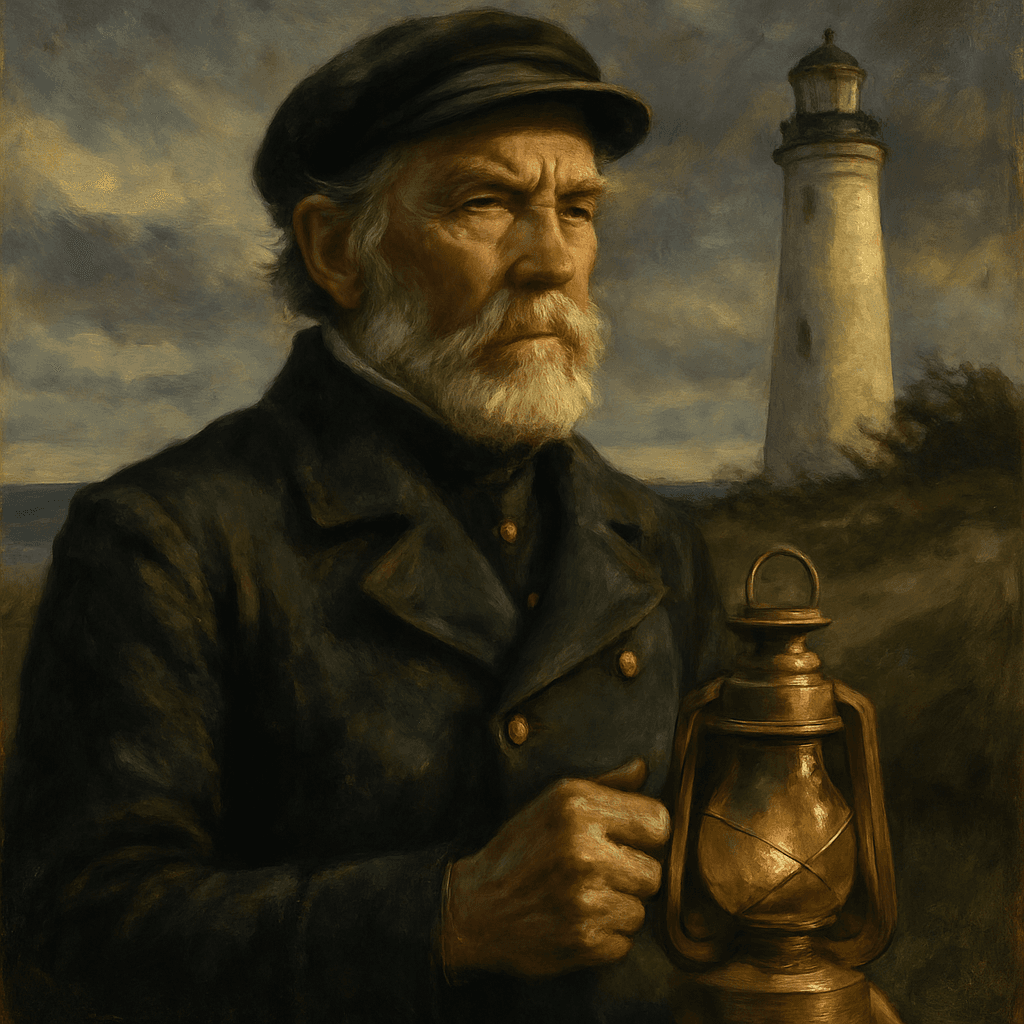
My name is Henry Bayles Ford, and for thirty years I was the man who kept the light burning at Cape Otway. They gave me one lamp and one coastline, and the coastline was longer. Everything you will walk past for the next ninety-six kilometres — the stacks, the wreck sand, the river mouths, the graves — I knew as weather and worry. I have a thing to show you at the end, and it is not the tower. Walk, and I will tell it in order, because that is the only way I know how.
You’re walking this one before anyone at Walk & Tell has. If something looks wrong, tap Report at any stop — we’ll fix it for everyone after you.
A story walk along the whole Great Ocean Walk, narrated by Henry Bayles Ford, first superintendent of the Cape Otway Lightstation. He watched this coastline swallow ships for three decades, and he walks it again with you from the Twelve Apostles to Apollo Bay. Each stop is a chapter: limestone stacks, wreck sand, river mouths, the keepers' graves, and the light itself. No puzzles — just the coast, and a man who could not save everyone on it.
Start here
Great Ocean Road
Start at the Twelve Apostles Visitor Centre car park off the Great Ocean Road; walk to the big interpretive sign near the path entrance, before the tunnel under the road.
Directions10 stops · 96.4 km
1 / 6
Best from stop 1 — the story is told in order. Tap Start here on any stop to begin there instead; the guide will catch you up.
12 Apostles Sign
“The Apostles Sign”
The interpretive sign at the western trailhead, where the Great Ocean Walk begins beneath the limestone stacks.
Start hereGibson Steps
A lookout above the steep stairway cut down the cliff to the beach beneath the Apostles.
Start hereShipwreck Beach
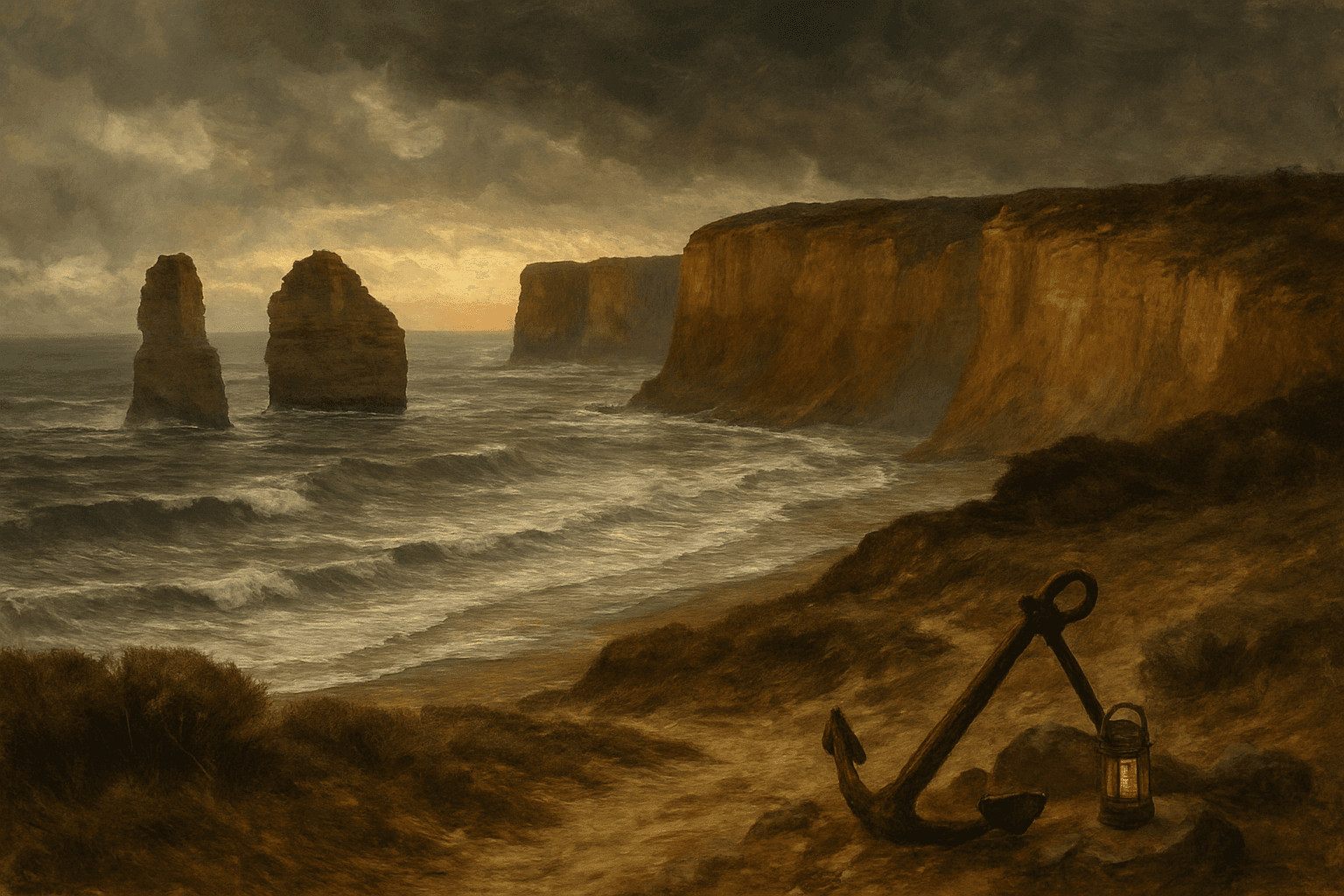
The beach below Moonlight Head where the anchors of two lost ships still lie in the sand.
Start hereCastle Cove Lookout
“Castle Cove”
A lookout on a cliff where the folded rock beneath holds fossils from the age of dinosaurs.
Start hereAire River
“Aire River Mouth”
The viewpoint where the Aire River meets the sea behind a wide sandbar and wetland.
Start hereCape Otway Lighthouse Cemetery
“The Keepers' Cemetery”
The small burial ground in the scrub near the Cape Otway Lightstation, where lighthouse families were laid to rest.
Start hereCape Otway Lightstation Lookout
“Cape Otway Lightstation”
The lookout at Australia's oldest surviving mainland lighthouse, on the headland where the Southern Ocean meets Bass Strait.
Start hereBlanket Bay
A sheltered bay east of the cape that once served as a landing and timber loading point for the Otways.
Start hereSaint Aidan's Anglican Church
“Saint Aidan's, Apollo Bay”
The Anglican church at the end of the walk in Apollo Bay, the trail's final landmark.
Start hereFord was the first superintendent of the Cape Otway Lightstation, appointed in 1848, and for roughly thirty years he kept the only light on this wreck coast — the cape, the cemetery and the drowned ships of this walk were his daily work.

Henry Bayles Ford was appointed the first head keeper of the Cape Otway Lightstation when it began operating in 1848, and served at the cape for around three decades. The light was built after a run of catastrophic losses in Bass Strait, and it stood at the point where the Southern Ocean meets the Strait — the landfall every immigrant ship out of England strained to find. Ford's station also became a telegraph point when the cable to Tasmania was brought ashore near the cape in 1859. He lived at the cape with his family in one of the most isolated postings in the colony, where keepers' households buried their dead in a small cemetery a short walk from the tower.
No reviews yet — be the first to walk it.