
City walk · Essaouira · Morocco
an 18th-century master builder: dry, proud, precise about stone, uneasy about who carried it
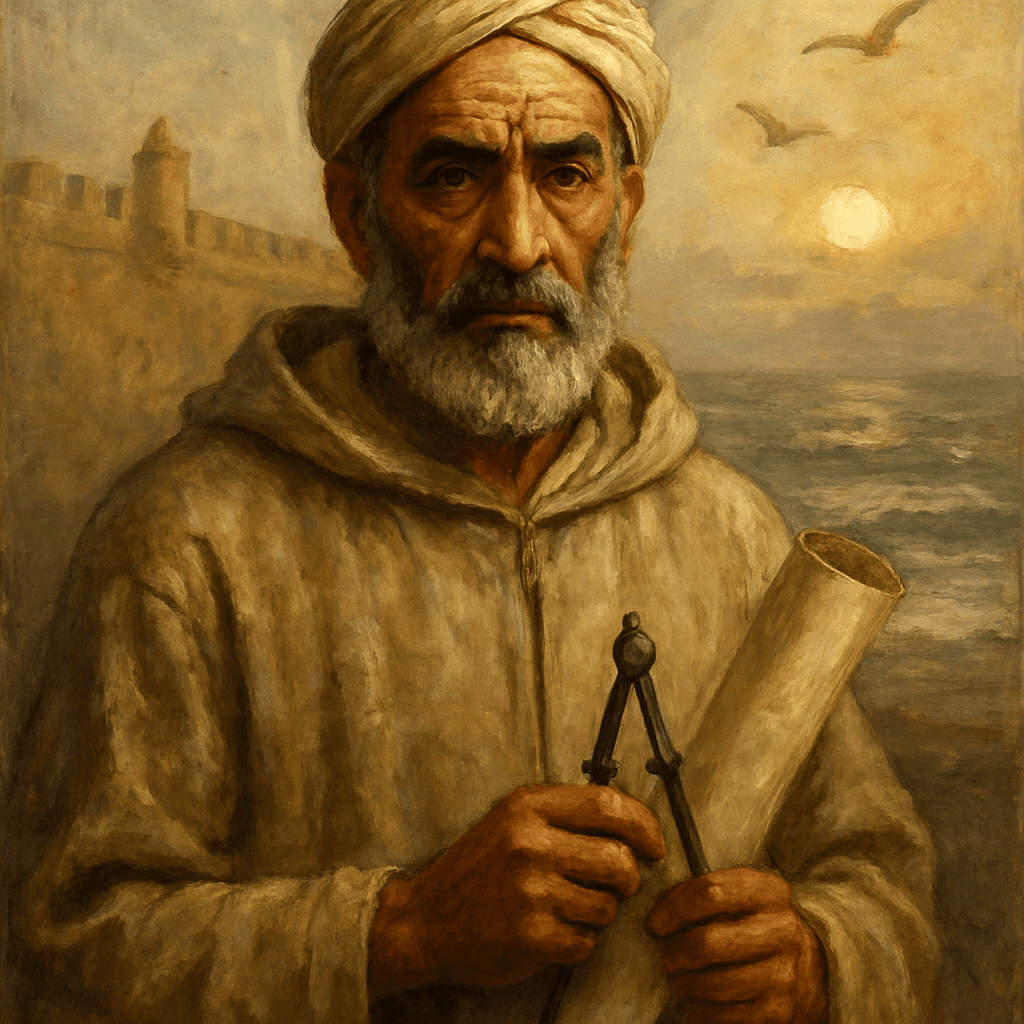
They called me Ahmed the Englishman, though I was born a subject of the Sultan. In 1760 he gave me a beach and an order: build a port city for foreign merchants, and make it straight. I have walked these streets for two hundred years watching what people do with my lines. Come with me from the harbour to the fish grills, and I will tell you what the drawings do not say.
You’re walking this one before anyone at Walk & Tell has. If something looks wrong, tap Report at any stop — we’ll fix it for everyone after you.
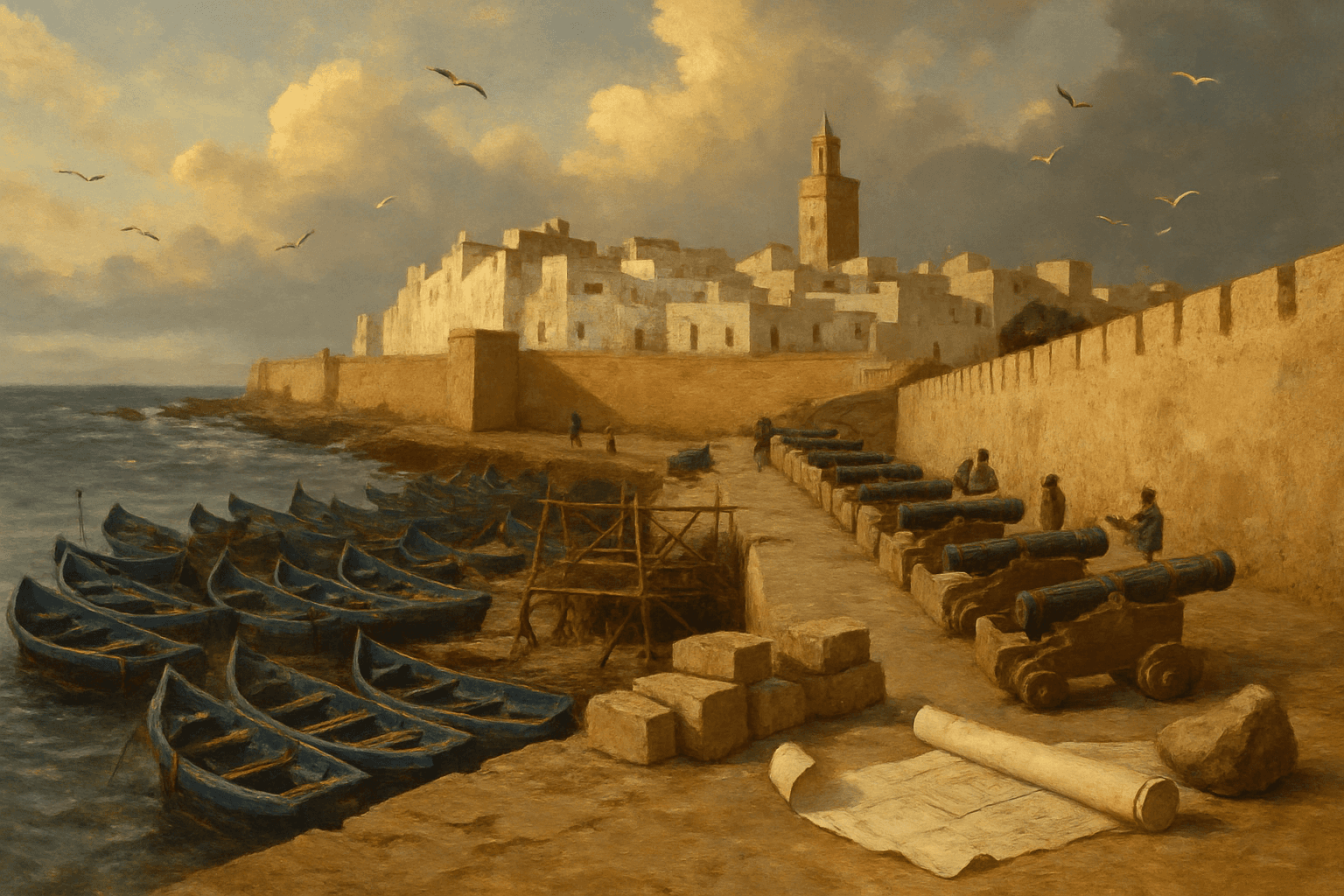
Essaouira was drawn on paper in the 1760s — straight streets, sea bastions, a port for foreign merchants — and then built in stone by the sultan's men and by French captives. This walk follows that line from the working port through the ramparts and the medina to the fish market where the town still eats. No puzzles: just a builder talking, and a city that is still in use.
Start here
La Kasbah القصبة
Stand at the port entrance, on the harbour side of the medina, with the fishing boats in front of you.
DirectionsBest from stop 1 — the story is told in order. Tap Start here on any stop to begin there instead; the guide will catch you up.
Essaouira · 10 stops · 3.6 km
about 38 min walking, 43 min listening at the stops — going inside is extra · Tap a stop on the map for a preview.
1 / 6
Best time to walk: Morning, before ten, for the fish market and cool ramparts; the port and bastions are windy and fully exposed all day.
Essaouira port
“The Harbour He Was Ordered to Build”
The working fishing port that was the whole reason the city exists.
Sqala of the Port
“Skala Du Port”
The 18th-century artillery platform guarding the harbour mouth.
Bab El Minzah
The main square lined with cafés, the social heart of the town.
Bab Sbaa
One of the medina's gates, a seam between the planned town and the old quarters.
Sidi Mohammed ben Abdallah Museum
“The House on Rue Laâlouj”
A 19th-century mansion on Rue Laâlouj, now the city's history museum.
Cooperative artisanale des marqueteurs du bois de thuya
“The Thuya Marqueters”
The woodworkers' cooperative where thuya root is cut and inlaid.
Skala De La Ville
The seafront rampart walk, with its old cannons and ocean view.
City Walls
“The Walls and the Captives”
The long fortified wall enclosing the medina, the city's defining structure.
Chaim Pinto Synagogue
The home and synagogue of Rabbi Chaim Pinto, in the old Jewish quarter.
Fish Market
“The Fish Market”
The market hall where the day's catch is sold and grilled on the spot.
The walk passes these without stopping. Add one and the route bends to take it in — the guide has nothing to say about them, so you are on your own there.
He was one of the architects entrusted by Sultan Mohammed ben Abdallah with building Mogador from 1760, alongside the Frenchman Théodore Cornut — the port, the bastions and the medina on this walk are his work.
Ahmed al-Inglizi, 'Ahmed the Englishman', was a Moroccan architect active in the second half of the 18th century under Sultan Sidi Mohammed ben Abdallah. From 1760 the sultan entrusted the design of the new port city of Mogador to several architects, among them al-Inglizi and the French engineer Théodore Cornut. The city was laid out for foreign merchants and built in part using French captives taken in the failed French expedition to Larache in 1765. The medina he helped plan is today a UNESCO World Heritage Site.
No reviews yet — be the first to walk it.