City walk · Delhi, New Delhi · India
Sir Edwin Lutyens
1869–1944 · a real person
a dry, vain, funny British architect of the 1930s, proud of his arch and still sore about a hill
Read what Sir Edwin Lutyens says
I am Edwin Lutyens, and I drew a great deal of what is under your feet. That arch ahead of me carries the names of thousands of men, and I was asked to make grief look like architecture. Then I have to walk home through a city that refuses to stay as tidy as my drawings. Come with me. I want to show you what was here before me, and what has grown over me since.
Delhi · 7 stops · 4.6 km
about 58 min walking, 29 min listening at the stops — going inside is extra · Tap a stop on the map for a preview.
Where it takes you
1 / 6


Best time to walk: Early morning or after 4pm. The India Gate lawns and Kartavya Path have no shade at midday, and Agrasen ki Baoli closes at 5:30pm.
90 min · 4.6 km · 7 stops · medium
You’re walking this one before anyone at Walk & Tell has. If something looks wrong, tap Report at any stop — we’ll fix it for everyone after you.
Very sunnyBest time to walk: Early morning or after 4pm. The India Gate lawns and Kartavya Path have no shade at midday, and Agrasen ki Baoli closes at 5:30pm.
The walk
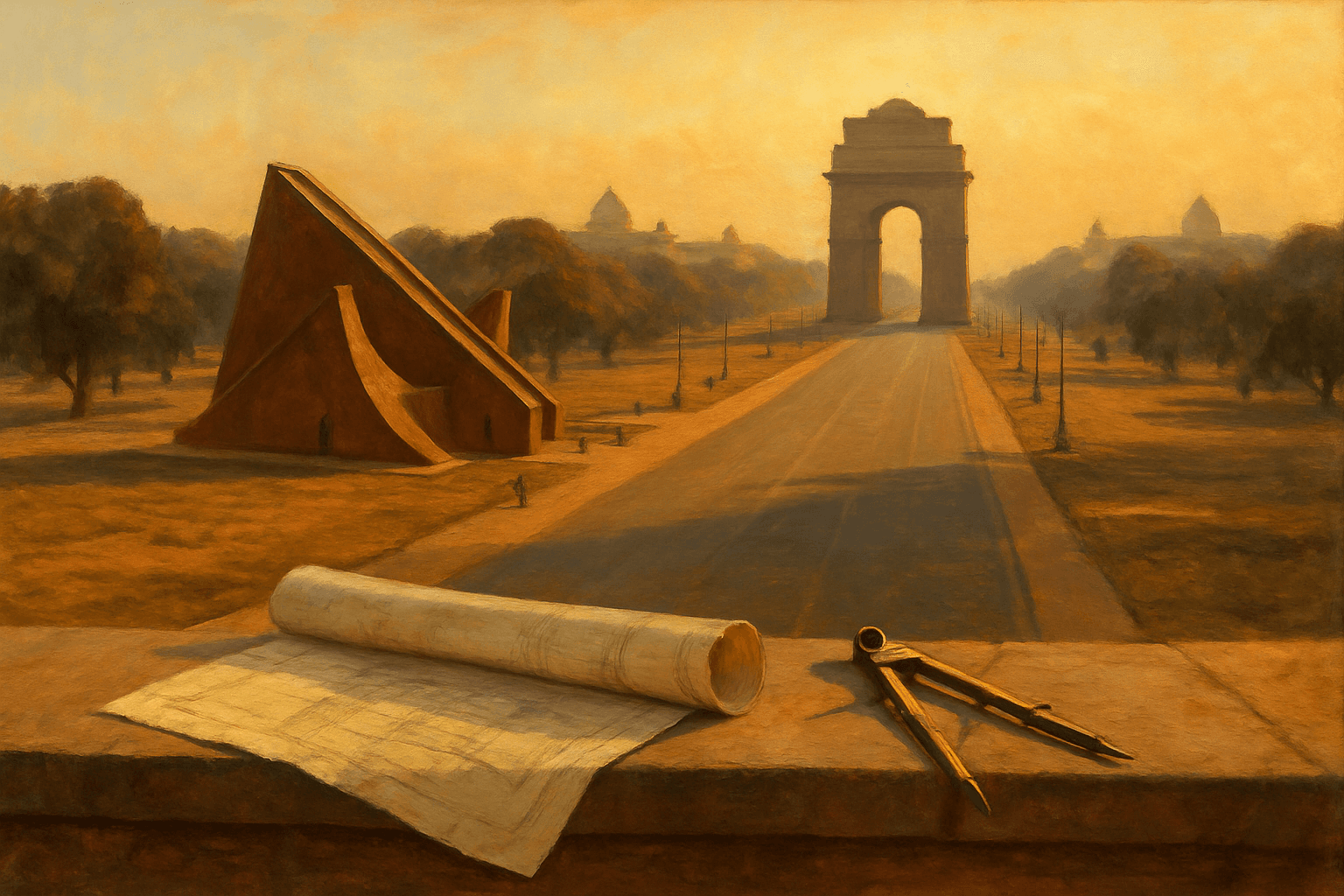
A single line across New Delhi, from the great war memorial arch to the circle of shops at its other end. The man who drew much of this capital talks you through the stepwell that was here before him, the giant sundial he had to plan around, and the markets that filled his tidy plan with noise. No puzzles: just a walk and a long, argumentative story. It ends where Delhi still shops, eats and sits out in the evening.
Start here
Hailey Road, Connaught Place
Stand on the lawns facing India Gate, on the Kartavya Path side, with the arch in front of you.
Directions