
Town walk · Souika, Chefchaouen · Morocco
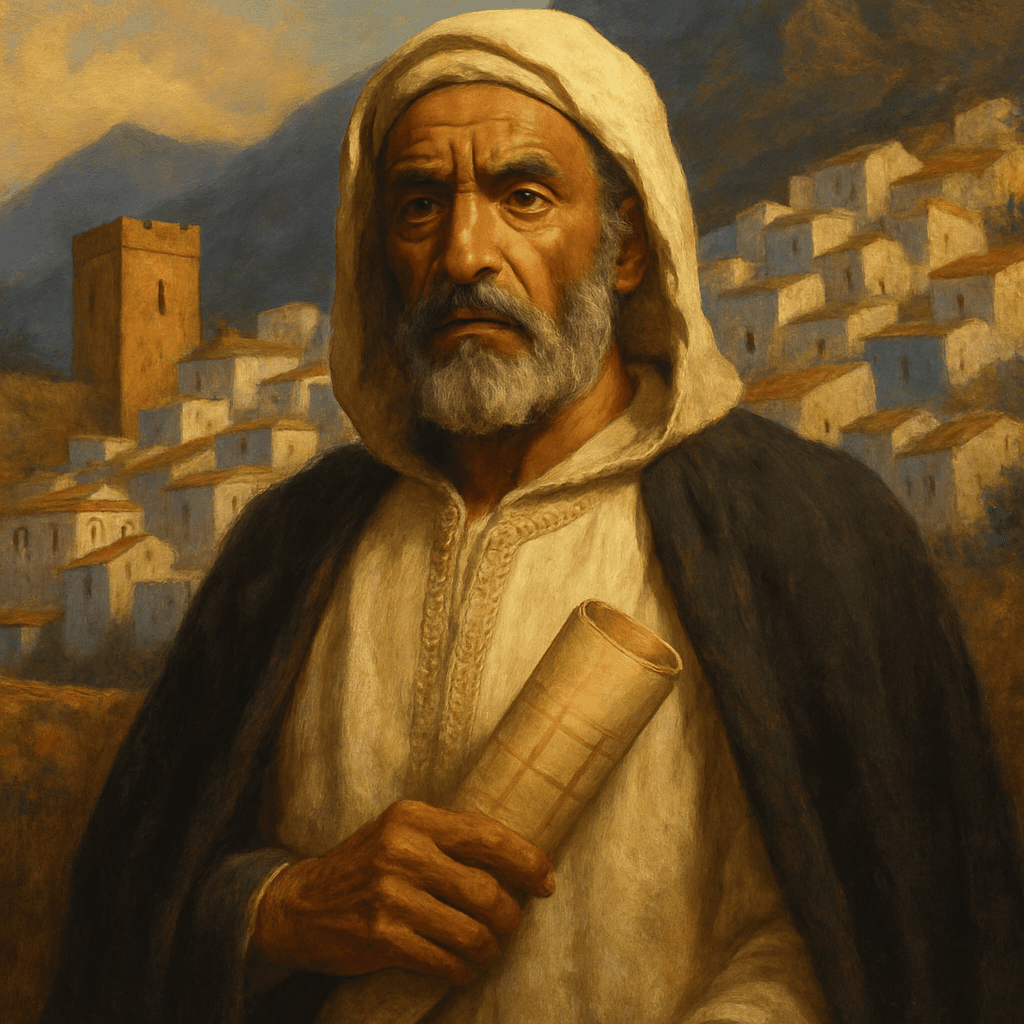
The town's 15th-century founder: a soldier's plainness, proud, watchful, softening into wonder at what his fortress became
They call me Moulay Ali ibn Rashid. In the year 1471 of your reckoning I stood on this hillside with masons, a plan for a fortress, and the certainty that Portuguese sails were coming for every town on this coast. I built walls. I did not build what you see now — this blue, this jasmine, these visitors with their little glass eyes. Walk down with me through my own town and let me find out, stop by stop, what became of it.
You’re walking this one before anyone at Walk & Tell has. If something looks wrong, tap Report at any stop — we’ll fix it for everyone after you.
Souika · 8 stops · 1.6 km
about 21 min walking, 32 min listening at the stops — going inside is extra · Tap a stop on the map for a preview.
1 / 6
Best time to walk: Early morning or after 5pm — the lanes hold shade but the open squares and the kasbah courtyard are hard at midday, and the medina is calmest before 10am. The Kasbah charges a small entry fee and closes in the evening.
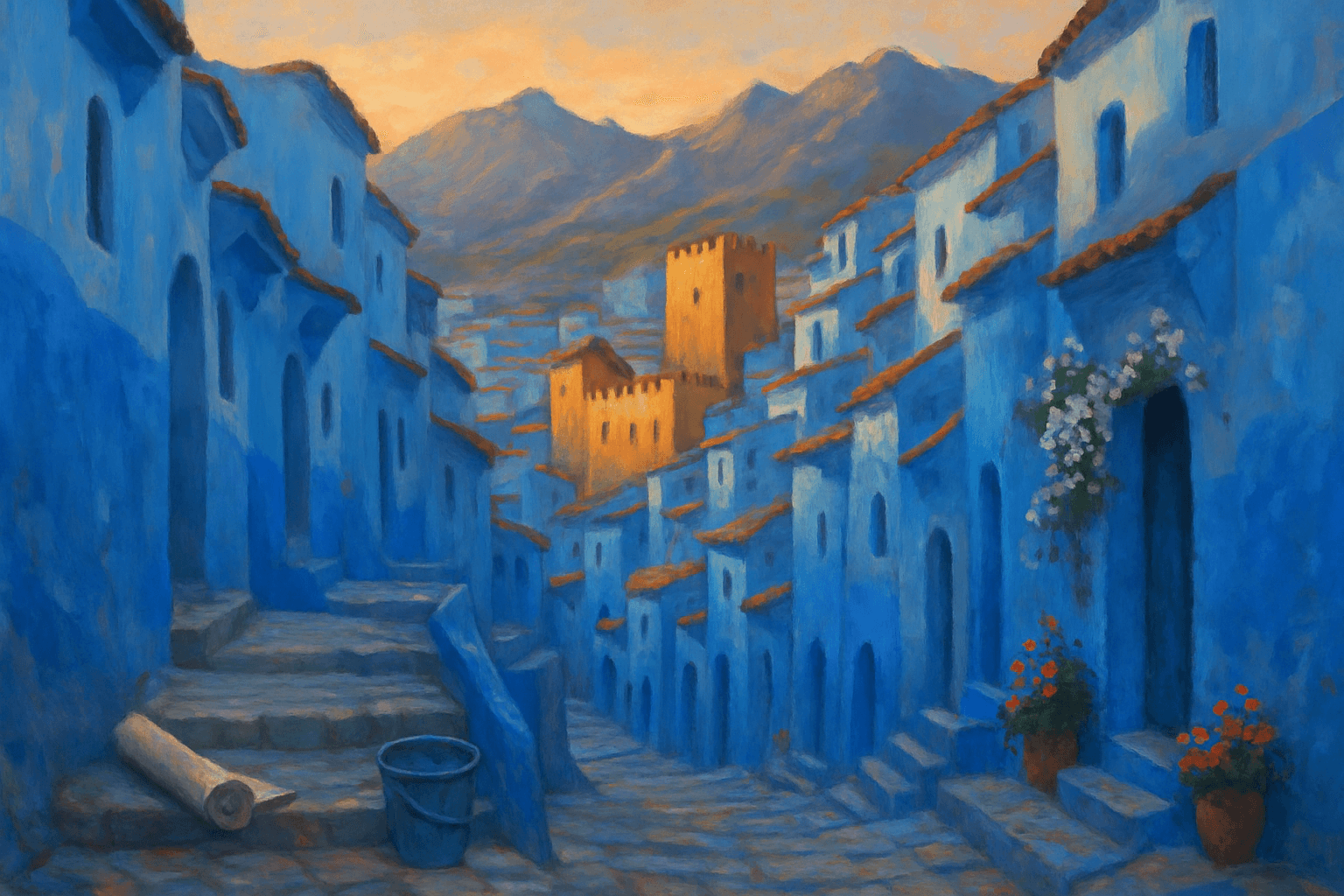
A story walk through the blue medina of Chefchaouen, told by Moulay Ali ibn Rashid, who founded the town in 1471 as a small fortress against Portuguese raids. No puzzles — just eight places where he stops, points, and talks: a church that shouldn't be here, a town hall, the mosque that carries his name, a house drowned in plants, painted stairs, the old Friday mosque, and finally the kasbah walls he raised. You'll see how a military outpost in the Rif turned into the town the whole world photographs.
Start here
Avenue Abdellah Chefchaouni شارع عبد الله الشفشاوني, Souk السوق
Start at the northern edge of the old town, on the open ground above the medina where the blue houses begin to climb the hillside — look uphill towards the mountain, then begin walking down into the lanes.
DirectionsBest from stop 1 — the story is told in order. Tap Start here on any stop to begin there instead; the guide will catch you up.
Chefchaouen
“The Blue City from Above”
The northern edge of the old town, where the blue houses begin their climb up the Rif hillside.
Eglise
“The Church in the Medina”
A Christian church standing quietly a few steps from the blue lanes of a Muslim mountain town.
Palais Municipal
The town hall of Chefchaouen, seat of the administration of the province that carries the town's name.
Molay Ali Ben Rachid
“Moulay Ali Ben Rachid”
A mosque in the medina that carries the name of the man who founded Chefchaouen in 1471.
Dar El Ouahabi
A house front so thickly hung with plants that visitors queue to photograph it.
Escaleras de colores
A flight of painted steps in the medina, now a small monument in its own right.
Grand Mosque of Chefchaouen
“The Grand Mosque”
The oldest mosque in Chefchaouen and its main historic Friday mosque, on Place Outa Hammam beside the kasbah.
Kasbah
“The Kasbah Walls”
The fortress Moulay Ali ibn Rashid erected in 1471 against Portuguese attack — the original Chefchaouen.
He founded Chefchaouen in 1471 and built its first fortress, the kasbah — the beginning and the end of this walk — and his name is still on a mosque in the medina.

Moulay Ali ibn Rashid founded the settlement of Chefchaouen in northwest Morocco in 1471, in the mountains between Tétouan and Ouazzane. He is recorded as a distant descendant of the Islamic Prophet Muhammad. His original town was little more than a small fortress — now known as Chefchaouen's Kasbah — built to defend the region against Portuguese attacks on northern Moroccan towns. A mosque in the town still carries his name, and the town he founded became the capital of the province that bears its name.
5.0 from 1 player
Christine
Sep 17, 2026
Great stories