Village walk · Göreme · Turkey
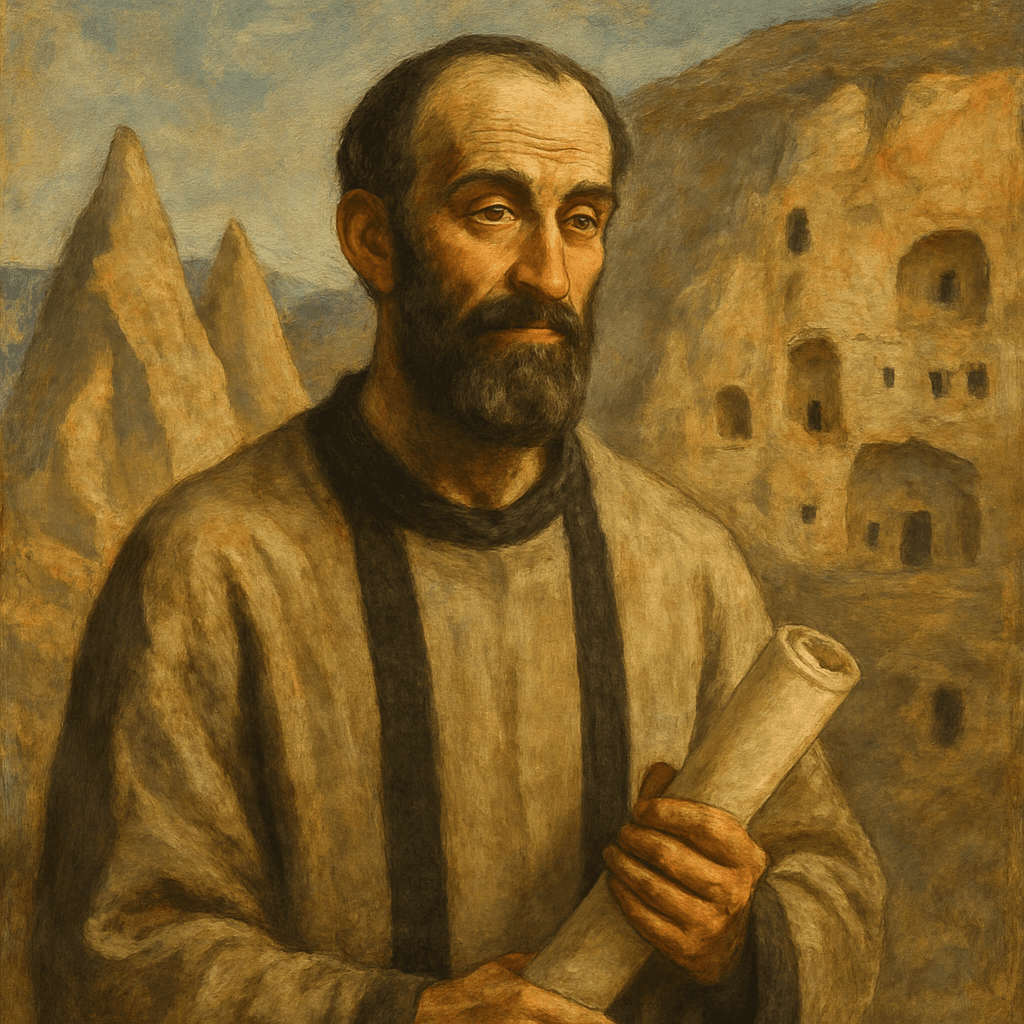
Basil of Caesarea
c. 330–379 · a real person
a 4th-century Cappadocian bishop, plain-spoken and stubborn, arguing with the future about what a community is for
Read what Basil of Caesarea says
I am Basil, bishop of Caesarea, and once I told men who wanted God that they should not go and get Him alone. Dig your cells, I said, but dig them near each other, eat at one table, share one loaf. Sixteen hundred years later my name is on a chapel here and on this whole valley, and I have never been told whether the thing I asked for actually held. So walk west with me, from the painted churches to the pigeon cliffs, and let me see this place through your eyes — I want to know who kept the rule after the monks were gone.
8 stops · 2.7 km
about 48 min walking, 32 min listening at the stops — going inside is extra · Tap a stop on the map for a preview.
Where it takes you
1 / 5


Best time to walk: Morning before 10am, when the balloons are down and the museum is quiet, or from 5pm so you finish at Pigeon Valley with the light low. The Open-Air Museum charges admission and closes in the late afternoon; midday on Müze Caddesi is hot and shadeless.
80 min · 2.7 km · 8 stops · medium
You’re walking this one before anyone at Walk & Tell has. If something looks wrong, tap Report at any stop — we’ll fix it for everyone after you.
Partly shadedBest time to walk: Morning before 10am, when the balloons are down and the museum is quiet, or from 5pm so you finish at Pigeon Valley with the light low. The Open-Air Museum charges admission and closes in the late afternoon; midday on Müze Caddesi is hot and shadeless.
The walk
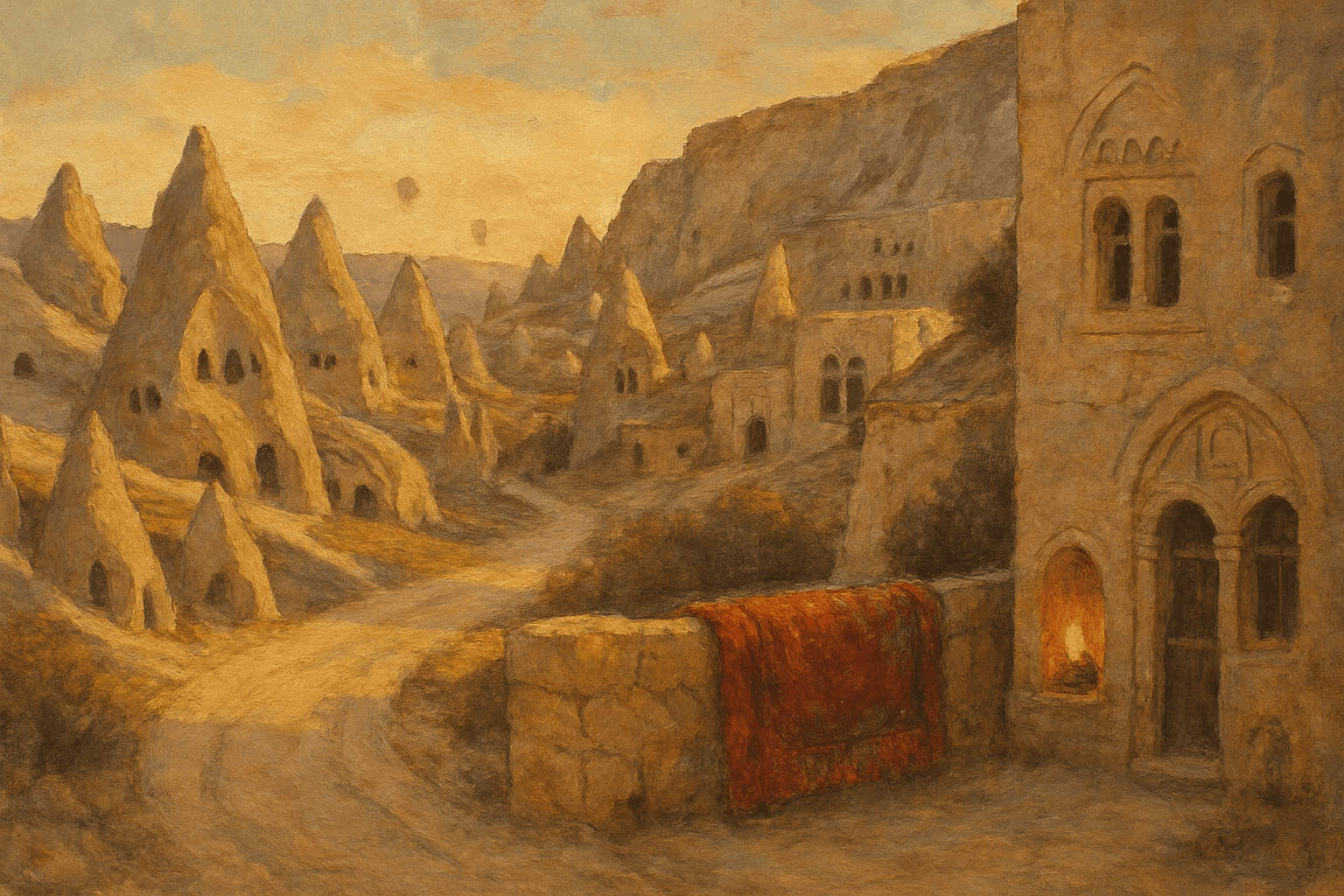
Göreme is a town carved into volcanic ash: churches, stables, kitchens and living rooms cut by hand into soft tuff. This walk runs one straight line west, from the painted rock churches at the Open-Air Museum, through the village, to the mouth of Pigeon Valley. There are no puzzles — only a voice from the fourth century, Basil of Caesarea, on whose instruction the first hermits cut cells in this stone, telling you what he asked for and what the valley did with it instead.
Start here
Müze Caddesi
Start at the ticket gate of the Göreme Open-Air Museum, at the top of Müze Caddesi about a kilometre east of the village centre — stand facing the rock cones inside the fence. You do not need a ticket to begin.
Directions