
City walk · Borgo Teresiano, Trieste · Italy
1861–1928 · a real person
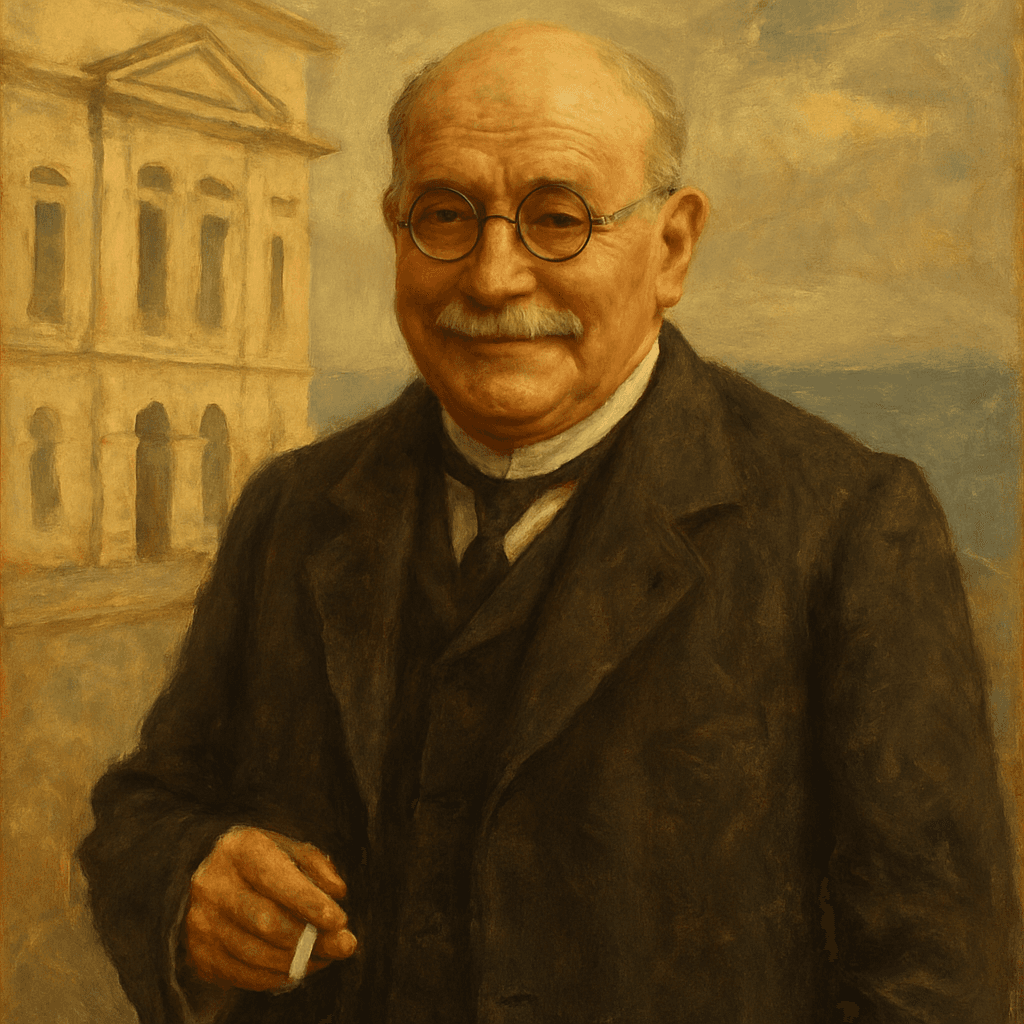
a courteous, self-mocking Trieste businessman of 1925, dry as his own cigarettes, warmer with every street
My name on the ledgers was Ettore Schmitz; on the books nobody bought, Italo Svevo. I sold paint that keeps barnacles off ships, and I wrote novels that sat in crates. Trieste was my whole world: Austrian on paper, Italian in the mouth, Greek and Serb and Jewish in its prayers. Walk this line with me, from the great square to the café where a young Irishman told me I was not a failure. I would like to see it once more, in your eyes.
You’re walking this one before anyone at Walk & Tell has. If something looks wrong, tap Report at any stop — we’ll fix it for everyone after you.
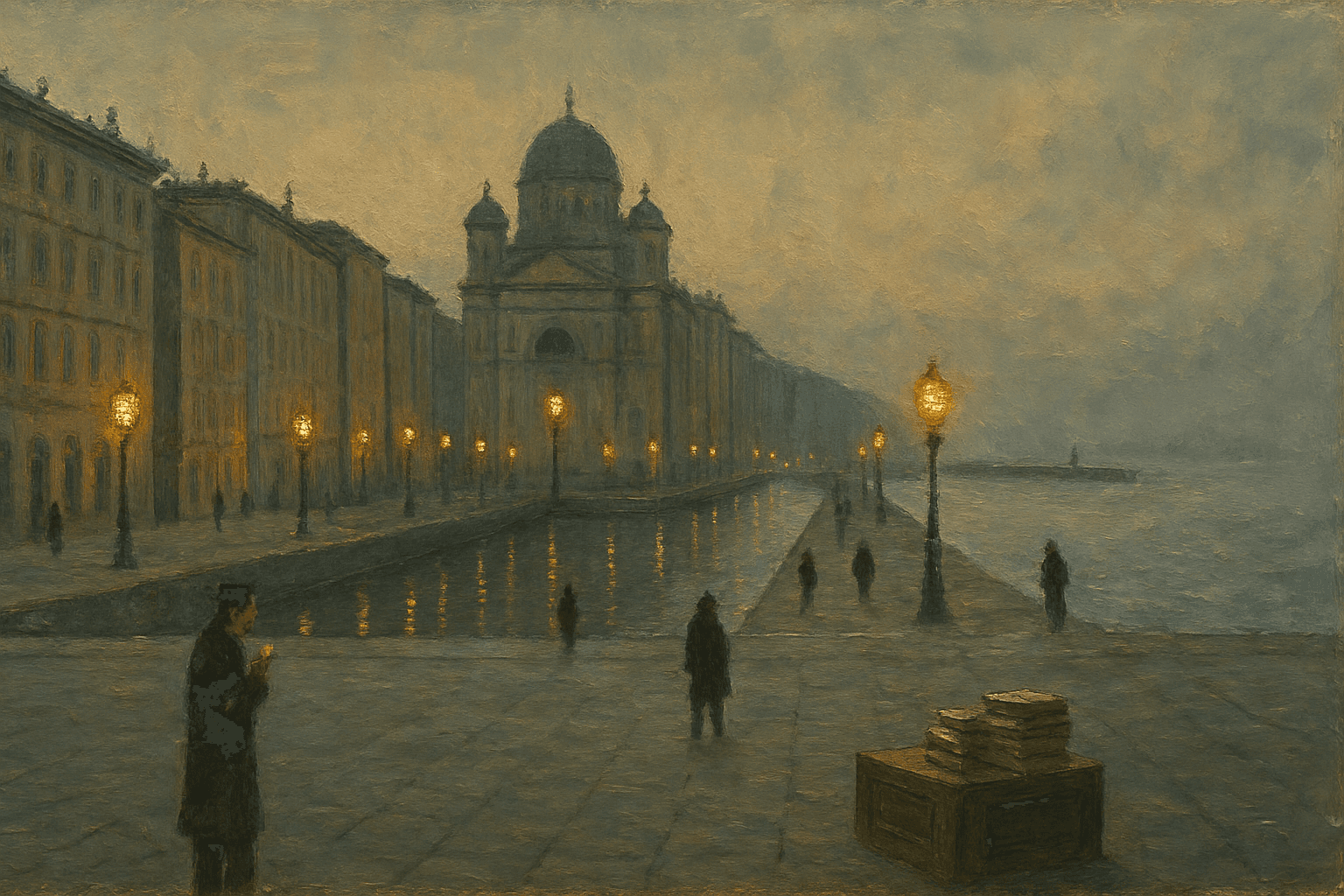
Trieste is the Trieste the Habsburgs drew on a drawing board: a great square open to the sea, a canal cut inland, insurance palaces, churches of four faiths within a few hundred metres. Italo Svevo sold underwater paint here by day and wrote novels nobody read by night. This walk follows his city in one line, from the big square and the pier through the old town and the canal quarter to the café where he and James Joyce argued. No puzzles — just a man talking about the place that finally, too late, read him.
Start here
2 Piazza Unità d'Italia, San Vito
Begin in Piazza Unità d'Italia, the huge square open to the sea, standing in the middle with the town hall behind you and the water ahead.
DirectionsBorgo Teresiano · 10 stops · 3.4 km
about 61 min walking, 44 min listening at the stops — going inside is extra · Tap a stop on the map for a preview.
1 / 6
Best time to walk: Late afternoon: the big square and the pier are brutal at 2pm in summer, and the Caffè San Marco at the end is best when the lamps come on.
Best from stop 1 — the story is told in order. Tap Start here on any stop to begin there instead; the guide will catch you up.
Piazza Unità d'Italia
“The Great Square”
Trieste's main square, open to the Adriatic at the foot of the San Giusto hill, lined with the municipal and shipping palaces of the Habsburg port.
Molo Audace
A 200-metre stone pier of 1751, renamed after the first Italian warship to enter the port in 1918.
Città Vecchia
“The Old Town Behind the Money”
The tangle of medieval lanes the new Austrian city was built around, now largely free of traffic.
The Roman Theatre
“Tergeste Under the Pavement”
A Roman theatre of the later first century AD, facing the sea, uncovered in the 1930s.
The Austrian Quarter
“The Quarter Vienna Built”
The business heart of Habsburg Trieste, where insurance houses and shipping firms built palaces in the style of Vienna.
Canal Grande
“The Canal They Cut Inland”
The navigable canal at the heart of Borgo Teresiano, dug so cargo boats could unload at the warehouse doors.
Sant'Antonio Taumaturgo, Trieste
“The Church at the Canal's Head”
The largest Catholic church in Trieste, closing the far end of the Canal Grande with an Ionic colonnade.
James Joyce
“The Englishman Who Wasn't”
A 2004 bronze statue of James Joyce, who taught English in Trieste and read Svevo's forgotten novel.
Saint Spyridon Serbian Orthodox Church
“The Serbs' Church”
The Serbian Orthodox church of Trieste, with a treasury of icons and documents going back to 1751.
Caffè San Marco
“The Café That Kept Us”
A 1914 Viennese Secession coffeehouse, burned in 1915, still serving coffee and selling books.
The walk passes these without stopping. Add one and the route bends to take it in — the guide has nothing to say about them, so you are on your own there.
Svevo was born and died in Trieste, worked in its business quarter beside this square, drank at the Caffè San Marco, and took English lessons from James Joyce in this city.

1861–1928
Italo Svevo was the pen name of Ettore Schmitz, born in Trieste in 1861 to a Jewish merchant family. He worked for years in a bank and then in his father-in-law's firm, which made anti-fouling paint for ships' hulls, and travelled for the business. His first two novels sold almost nothing; he nearly gave up writing. In Trieste he took English lessons from James Joyce, who later championed his work in Paris, and his third novel, 'Zeno's Conscience' (1923), brought him late fame. He died in 1928 after a car accident.
No reviews yet — be the first to walk it.