
City walk · Belém, Lisbon · Portugal
1699–1782 · a real person
an old, iron-dry statesman in exile, precise, unsentimental, quietly furious at being remembered as a monster
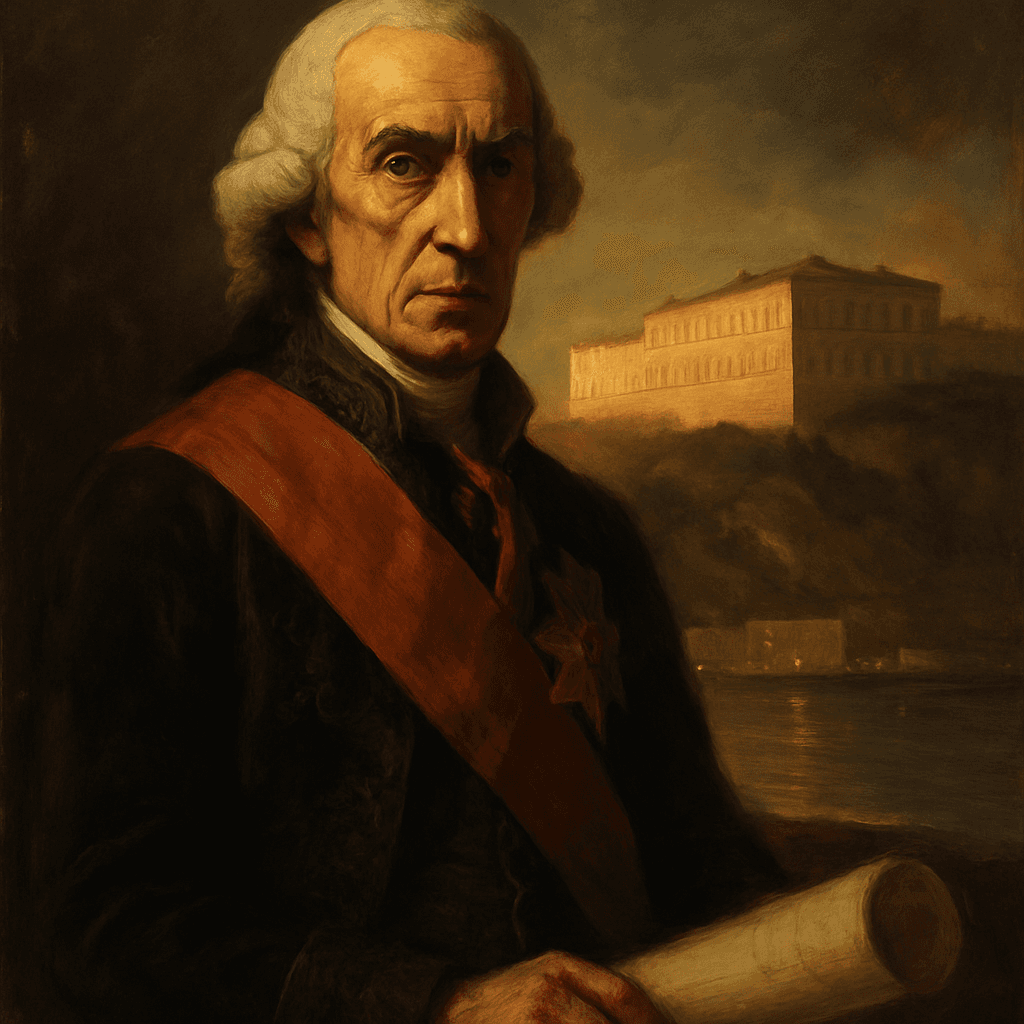
They call me the Marquis of Pombal, and for twenty-five years nothing was built, hanged or taxed in this kingdom without my signature. On the first of November 1755 the earth opened, the sea came up the Tagus, and the court was sitting safely out here in Belém — which is why everything you are about to see exists. I am buried halfway down this hill, in a church I raised to a king's lucky escape, and I would like someone to walk the ground with me and look at it honestly. Not at the postcards. At the salt, the stone, the seahorses, and the tower that decides who gets into Lisbon. Walk down towards the river; I'll talk as we go.
You’re walking this one before anyone at Walk & Tell has. If something looks wrong, tap Report at any stop — we’ll fix it for everyone after you.
Belém · 9 stops · 2.9 km
about 58 min walking, 36 min listening at the stops — going inside is extra · Tap a stop on the map for a preview.
1 / 6
Best time to walk: Early morning or after 5pm — the Praça do Império and the riverside have no shade at midday. Jerónimos and the Archaeology Museum are closed Mondays; the palace and museums shut on 1 January, 1 May and 25 December.
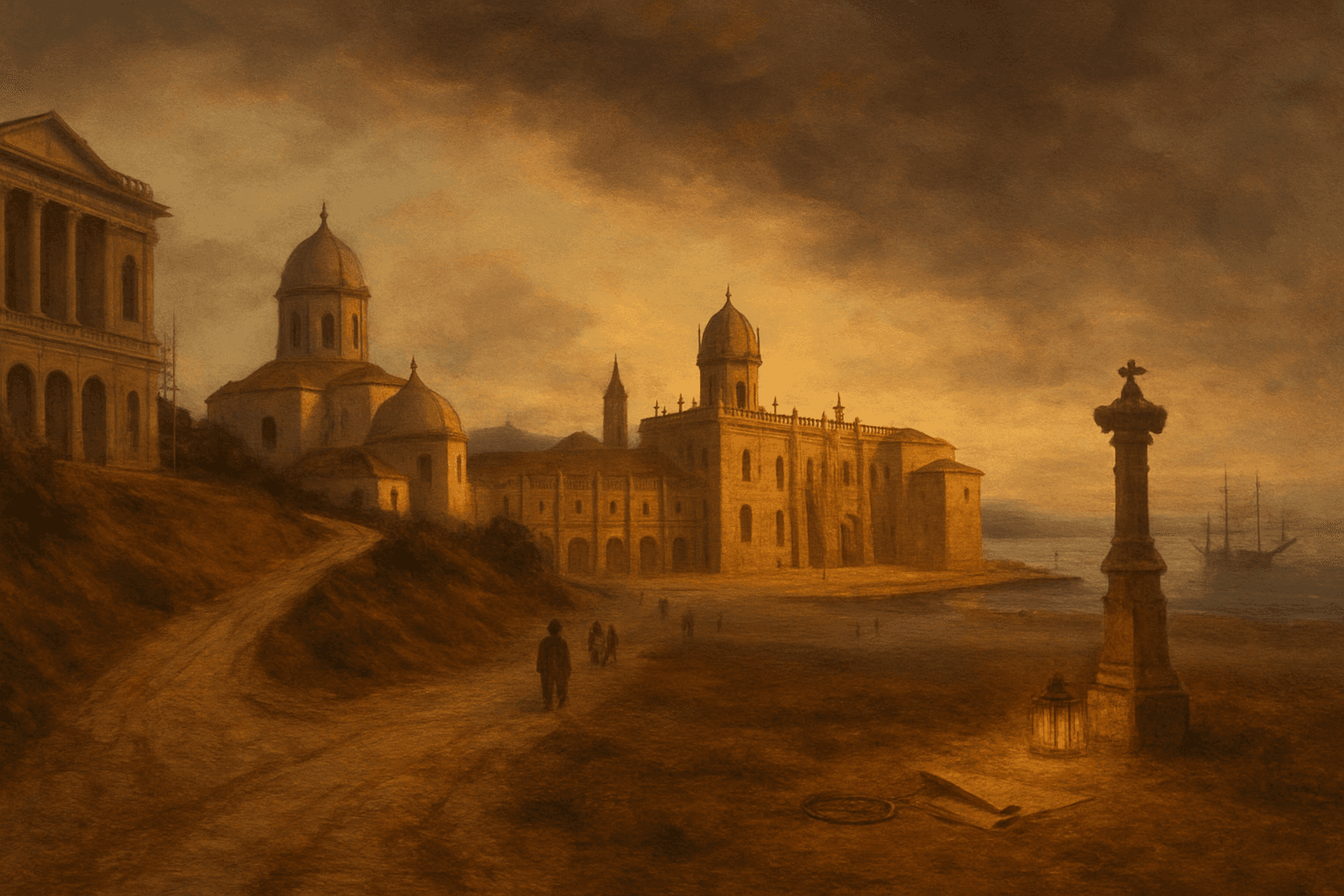
A single line down the hill from the royal palace at Ajuda to the tower standing in the Tagus, told by the Marquis of Pombal — the minister who ran Portugal after the 1755 earthquake, buried in the second church on this walk. No puzzles: at each stop he tells the chapter and points at the thing you'd otherwise walk past, from a stone he raised on salted ground to a seahorse carved for a 1940 fair. Belém is where Portugal keeps its self-portrait, and he has opinions about all of it.
Start here
Lisboa
Stand in the Largo da Ajuda, facing the long pale front of the Palácio Nacional da Ajuda, with the hill and the city behind you.
DirectionsBest from stop 1 — the story is told in order. Tap Start here on any stop to begin there instead; the guide will catch you up.
Palace of Ajuda
“Palácio Nacional da Ajuda”
The vast neoclassical palace begun in 1796 on the site of the royal family's wooden emergency home after the 1755 earthquake.
Igreja da Memória
A domed church of 1760 built to mark King Joseph I's escape from assassination — and the resting place of the Marquis of Pombal.
Hércules Farnésio
An 1806 copy of the Farnese Hercules from the Machado de Castro sculpture workshop, standing near the tropical garden gates.
Padrão-Memória do Chão Salgado
A stone marker of 1759 on the ground where the Duke of Aveiro and the Távora family were executed, their house razed and the earth salted.
Jerónimos Monastery
“Mosteiro dos Jerónimos”
The great Manueline monastery begun in 1501 with money from the pepper trade, took a century to build and holds Vasco da Gama's tomb.
National Museum of Archaeology, Lisbon
“Museu Nacional de Arqueologia”
Portugal's largest archaeological museum, founded 1893 by José Leite de Vasconcelos in the monks' old dormitory wing.
Cavalos Marinhos
Pairs of stylised seahorses carved in lioz marble by António Duarte between 1940 and 1942 for the great riverside square.
Monument of the Discoveries
The 56-metre prow-shaped monument of 1960, with 33 figures of the Age of Discovery and a vast compass rose paved in front of it.
Belém Tower
The 16th-century Manueline tower in the Tagus, built 1514–1519 by Francisco de Arruda as Lisbon's ceremonial sea gate — and long its prison.
The walk passes these without stopping. Add one and the route bends to take it in — the guide has nothing to say about them, so you are on your own there.
He raised the Chão Salgado stone and the Igreja da Memória on this hillside, governed from the royal wooden palace at Ajuda after the 1755 earthquake, and lies entombed in the church at stop two.

1699–1782
Sebastião José de Carvalho e Melo, 1st Marquis of Pombal, was chief minister to King Joseph I and effectively ruled Portugal after the Lisbon earthquake of 1 November 1755, directing the rebuilding of the city. In 1758 an attempt was made on the king's life; Pombal prosecuted the Távora family and the Duke of Aveiro, and in 1759 ordered a stone padrão raised on the salted ground where the executions took place. The Igreja da Memória, begun in 1760 to mark the king's escape, holds his mausoleum. On Joseph's death in 1777 Queen Maria I dismissed and banished him; he died at Pombal in 1782. The royal family was in Belém on the morning of the earthquake and escaped it.
4.0 from 1 player
Christiane
Sep 21, 2026
Clues were clearGood route
A little minus for the distance between the first stop and the rest. And I would have loved a little more storytelling. But otherwise a nice and enjoyable tour 😊 and a cool way to see the sights 👍🏼