
City walk · Barcelona · Spain
1852–1926 · a real person
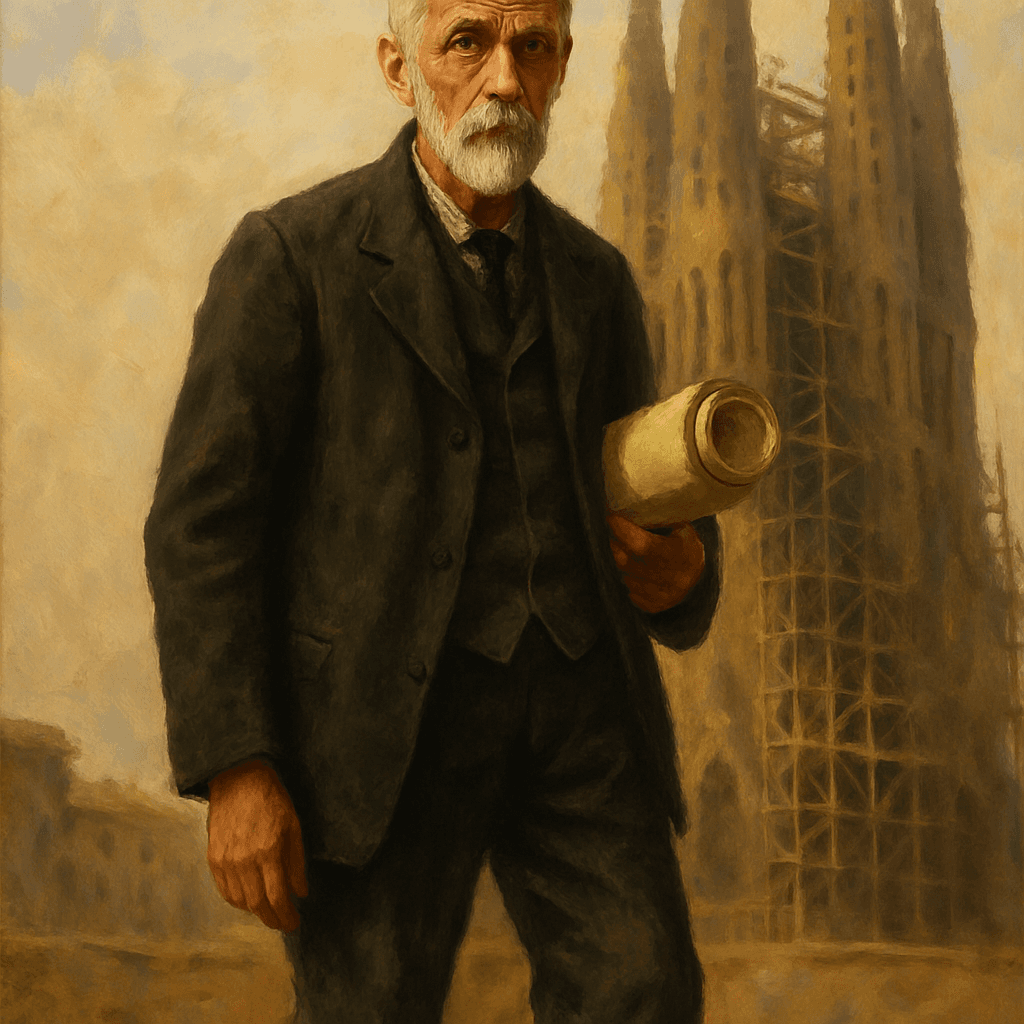
an old, stubborn, devout builder; plain speech, dry humour, obsessed with stone and money
My name is Antoni Gaudí, and I built in this city for fifty years. They call me a genius now. In my lifetime they called my work a quarry, and drew cartoons of it in the newspapers. Walk with me from the church that ate my life down into the old streets where I began, and I will tell you what each building cost, and who paid, and who complained. My client, the one upstairs, was never in a hurry. You and I have ninety minutes.
You’re walking this one before anyone at Walk & Tell has. If something looks wrong, tap Report at any stop — we’ll fix it for everyone after you.
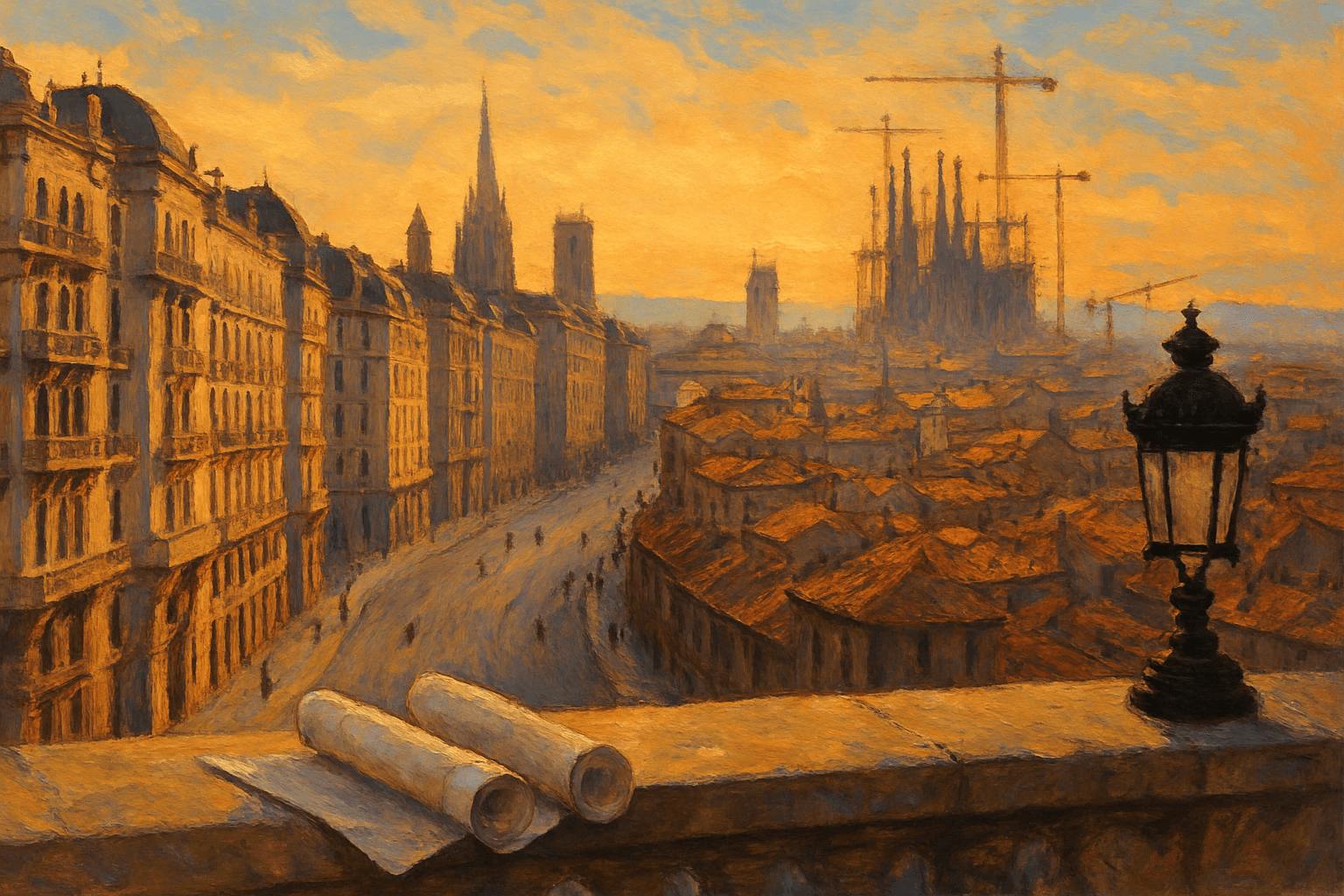
A single line across Barcelona, from the unfinished basilica that swallowed Antoni Gaudí's last forty years down the grand boulevard of the rich, into the market, the cathedral and the medieval lanes. Gaudí himself tells it: the clients, the quarrels, the money, the stone. The walk ends among the Gothic palaces where a young Picasso was learning to laugh at him. It is the city as a working man saw it, not as a postcard.
Start here
Barcelona · 8 stops · 4.6 km
about 81 min walking, 33 min listening at the stops — going inside is extra · Tap a stop on the map for a preview.
1 / 6
Best time to walk: Early morning or after five. Passeig de Gràcia bakes at midday, and the Boqueria is calmer before ten; the market is closed on Sundays.
401 Carrer de Mallorca, l'Eixample
Begin on the public pavement outside the Sagrada Família, on the Nativity façade side facing the park and pond. No ticket needed for this walk.
Best from stop 1 — the story is told in order. Tap Start here on any stop to begin there instead; the guide will catch you up.
Basilica of the Sagrada Familia
“The Church That Ate My Life”
Gaudí's unfinished expiatory temple, begun in 1882 and funded from the start by donations alone.
Plaça de Catalunya
“Where the Walls Came Down”
The vast square where the medieval city met the nineteenth-century grid, urbanised in 1902.
Font de Canaletes
“Drink and Come Back”
The ornate lamp-post fountain at the head of La Rambla, named after the old city wall's water pipes.
Mercat de la Boqueria
“The Goat Market”
Barcelona's great market hall, trading on this spot since 1217 and roofed in iron in 1914.
Bàrcino
“Letters for a Roman Town”
Joan Brossa's 1994 metal letters spelling the Roman name of the city, beside the old walls.
Barcelona Cathedral
“The Geese in the Cloister”
The thirteenth-to-fifteenth-century cathedral of the Holy Cross and Saint Eulàlia, with its goose-filled cloister.
Plaça Sant Jaume
“Two Governments Facing Off”
The administrative heart of Barcelona and Catalonia, with the city hall and the Generalitat palace facing each other.
Museu Picasso
“The Boy Who Laughed At Me”
Five adjoining medieval palaces on Carrer Montcada holding 4,251 works by Pablo Picasso.
The walk passes these without stopping. Add one and the route bends to take it in — the guide has nothing to say about them, so you are on your own there.
Gaudí designed the Sagrada Família, Casa Milà and Casa Batlló on this line, lived his last years on the basilica site, and died after being struck by a tram while walking into the old city.

1852–1926
Antoni Gaudí i Cornet was born in 1852 and moved to Barcelona in 1870 to study architecture, taking eight years to qualify. He designed Palau Güell, Park Güell, Casa Batlló and Casa Milà for the city's richest families, then gave his final decades to the Sagrada Família, which was between fifteen and twenty-five percent complete when he died. He was a devout Catholic who planned the Casa Milà as a religious symbol, and was overruled by its owner. On 7 June 1926 he was run over by a tram and died three days later, aged 73; he is buried in the basilica's crypt.
5.0 from 1 player
Grace
Oct 18, 2026
Good route
This was a fun way to spend time